Alcohol Adultery Sex and Death: The Grant Park Actress Murders - PART II - Conclusion
CALL 888-MURDERY, that's, 888-687-3379, to share YOUR Kinda Murdery story or your story of living with a disability or other challenges, and you could inspire an episode of the show!
Sources:
https://historysevilecho.com/grant-park-double-murder/
https://medium.com/lessons-from-history/two-dead-actresses-in-a-park-d27cebe94748
Become a supporter of this podcast: https://www.spreaker.com/podcast/kinda-murdery-true-crime-murder-stories--5496890/support.
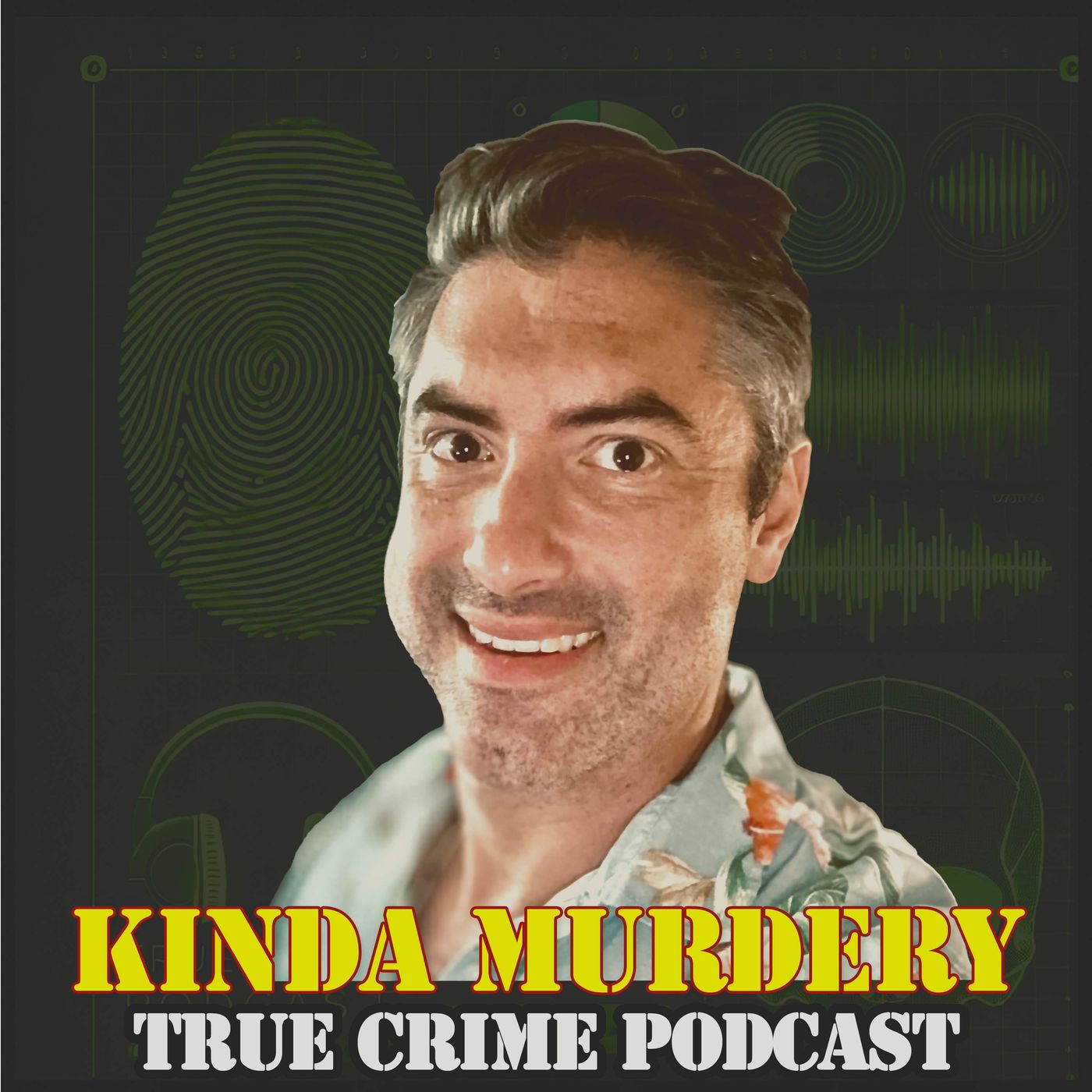
Zevon Odelberg is a true crime podcast host and disability advocate. Zevon has cerebral palsy and he wants Kinda Murdery to be welcoming community for people with disabilities and for people living with challenges of any kind. Life can be hard, but being together makes it better.
Warning, Kind of Murdery contains adult themes, explicit language, and descriptions of violence. It is not suitable for anyone, and we recommend you stop listening now. True crime with a dash of the paranormal, the garish, the strange in the darkly comic. I'm Zevanodelberg, host of kind of Murdery, a podcast that's about more than just murder. It's my very own pocket dimension, home to a curated collection of bizarre and compelling stories, the unsolved, the unsettling, and the unbelievable. I cover it all just so long as it's kind of Murdery that is accurate everybody, just like it says in the intro, I am Zevnodeberg, and this is kind of Murdery.
Thank you for deciding to join me. You have found your way too. Part two the conclusion of Alcohol, Adultery, Sex and Death. So if if you haven't heard part one yet, go back and listen to it. If you're all caught up, well then I'm going to rewind the story just a bit to allow you to settle back into the narrative. But otherwise I am ready to go, and if you're ready to then please join me as we uncover what truths we can and solve what mysteries we may kind of murderies, alcohol, adultery, sex and death.
The Grant Park Actress Murders, Part two starts now. Max Writer, a local resident, becomes an unexpected witness to a peculiar scene. That evening, around nine thirty pm, Writer is on his way home when something unusual in the gutter catches his eye, a woman's hat. As he bends down to retrieve it, the red tail lights of an automobile speeding away grab his attention. There weren't many other machines in sight, Writer recalls, noting the oddity of the situation. It looked funny to me. Deciding to take the hat with him, he plans to give it to his landlady, unaware of its significance.
The following morning, the police conduct their door to door inquiries, Writer connects the dots. I read of the murder in the tribune this morning, he tells the officers. But I didn't connect it with this hat. I didn't report it because I didn't want to get into trouble. His discovery, initially seen as trivial, suddenly takes on a grave importance. When shown the hat, Robert McCarthy immediately recognizes it. It's Marie's hat. He confirms she wore it all the time. This simple accessory, once a personal belonging, now becomes a crucial piece of evidence.
The mystery deepens with the involvement of the departing car. Was it mere coincidence or did it play a part in the women's disappearance. The circumstances of the hat's loss raises questions. If Marie had willingly entered the car, why leave her hat behind. The scenario suggests a more sinister possibility abduction. This new lead propels the investigation forward as detectives ponder whether the women's encounter the car was by choice or by force. As the second day of the investigation draws to a close, a divergence in theories becomes evident between the medical officials and the police detectives regarding the deaths of Marie A. Mrami and Lilian Thompson.
Coroner Simons, analyzing the crime scene, focuses on a particularly striking detail, the substantial amount of blood present. The observation leads him to a hypothesis involving more than just the two victims. He speculates that the volume of blood could indicate the involvement of a third person, possibly an abductor, who got wounded during a struggle. This theory propels Simons to recommend a citywide search of hospitals for anyone with unexplained injuries, a move that could potentially identify an injured suspect.
On the other hand, the police, led by Detective Sergeant Lawrence McCarthy, are formulating a different theory. McCarthy posits that the women were forcibly ejected from a moving vehicle. He theorizes that the impact of this action rendered them unconscious. Robson, however, might have briefly regained consciousness, only to collapse again after dragging herself a short distance. This struggle for survival could explain the scrape marks on her face, a desperate attempt to find help before succumbing to her injuries.
The investigation takes another twist as further research uncovers new information about the mysterious phone call that had initially alerted the authorities to the crime scene. Contrary to what was first believed, the call did not come from the Conquerling offices. Instead, it was traced to a public payphone located outside the Stratford Hotel on Michigan Avenue. This new detail aligns geographically with the events of the case. The Stratford Hotel is situated just a little over a block away from where the bodies of Marie Almami and Lillian Thompson were found.
It's plausible to theorize that a pedestrian, having come across the grizzly scene, used the payphone to report the discovery to the police. However, this revelation raises another question, why did the informant choose to remain anonymous. The decision to use a public payphone rather than making a direct call from a personal or business line jests a deliberate attempt to avoid identification. The choice by the informant adds another layer of mystery to the case, prompting the investigators to consider the possible reasons behind this desire for anonymity.
Was it simply a passerby unwilling to get involved, or did the caller have a deeper connection to the crime. On the evening of November sixteenth, nineteen twenty, the investigation into the deaths of the actresses at Grant Park takes another dramatic turn. This development begins with an innocuous visit by George Shepley, a Chicago real estate agent, to the Clark Garage for routine maintenance on his car. Adjacent to Shepley's car, a mud spattered Stephens duryas sedan stands out with its damaged fender and missing hubcap.
Curious, Shepley inquires about the Sudan's condition from his regular mechanic, Harry Jorgenson. What's the matter, but in a jam, he asks. Jorgenson's response is startling. The mechanic, overcome with emotion, confesses to Shepley that he was responsible for the tragedy that unfolded with the young women in the park. Recognizing the gravity of the confession, Shepley, who is acquainted with some of the police officers working on the case, decides to assist. He invites Jorgenson to his house. Come home with me tonight and I'll take you down tomorrow and we'll see what we can do.
The following morning, Shepley and Jorgensen arrive at the police station, where they meet Detective Sergeant James Markham, an old friend of Shepley's. Markham quickly escalates the matter to Lieutenant Michael Hughes, the chief of detectives. Under intense questioning, a sorrowful tale begins to unfold, a narrative that promises to shed light on the mysterious and tragic events that had claimed the lives of Rami and Thompson. The confession of the mechanic, coupled with the physical evidence of the damaged car, seems poised to reveal the missing pieces of the puzzle that the detectives had been tirelessly working to solve.
Jorgensen and his buddy Michael Broomberg, had borrowed the Spencer Durias sedan for a joy ride on Saturday night. Their route took them north parallel to Lincoln Park and then west on Clark Street. After dinner and a couple drinks, at around ten pm, they resumed cruising. As they rounded the corner at Clark and Grand Avenue, Bloomberg noticed a woman. Look here, he exclaimed. She was leaning against a building clutching a bottle wrapped in paper. The men parked and approached her, only to see her drop the bag, breaking a whiskey bottle on the pavement.
Take me home, she muttered drunkenly. At that moment, across the street, another woman started screaming, hey you and began to wave at them, also appearing intoxicated. Broomberg and Jorgensen helped the two women into the car. Where do you live, Bloomberg asked the first woman. Their inebriated state made it difficult for them to respond coherently. Finally, one muttered nine O two Dearborn Street. They drove to the address, but when they rang the bell, a tenant yelled down, what do you want? This woman says she lives here.
Blomberg called up nothing doing, The tenant replied, dismissively, closing his window. Drunks two oh nine North Dearburn, slurred the woman. After Bloomberg returned to the car. However, that address also led nowhere. It was a fire department state. As Jorgenson and Bloomberg drove away with the windows down, the cold breeze flowing into the car seemed to revive the two women. They started to sing and laugh loudly, their spirits lifted despite their drunken state. Concerned about attracting unwanted attention, particularly from a traffic policeman, Bloomberg acted to quiet the louder of the two women, placing his hand over her mouth.
Continuing their drive, they rolled past the Navy station at the north end of Grant Park and stopped in front of a gate. Broomberg opened the gate, allowing the car to proceed slowly through the park. Amidst the journey, one woman's voice broke into the night, mumbling repeatedly, I want to get out, I want to get out. Her companion echoed this sentiment firmly, stating We're going to get out, That's all there is to it. Faced with their determination, Jorgenson eventually stopped the car. The women, seizing on the opportunity, opened the doors and tumbled out onto the park grounds.
Jorgenson in Broomberg, perhaps realizing the gravity of the situation, tried to persuade them to return to the car, suggesting let us take you to a hotel where you can sleep it off, but the women they were resolute in their decision. They refused to leave the park, adamant about staying, despite the efforts of Jorgenson and Broomberg to convince them otherwise. The night's events had taken an unexpected turn, leaving the two men in a predicament, with the women determined to stay in the park and temperatures dropping to perilous lows.
According to Jorgenson's account, he and Broomberg spent about fifteen minutes trying to persuade the women to leave the park and return to the car. Despite their efforts, though women remained firm in their decision to stay. Eventually, recognizing the futility of their attempts, Jorgenson and Broomberg conceded defeat. They got back into the car and left the park, returning the vehicle to the garage before heading home to the comfort of their warm beds. As they settled in for the night, thoughts of Lillian and Marie faded from their minds.
Meanwhile, in the secluded darkness of Grant Park, a tragic scene unfolded. Interjecting here for a moment, one would think that if the men were as innocent as their version of the story, which is what I'm telling here, If they were as innocent as their version of the story claims, that they ought to to have gone to the fire department or the police station and gotten some official to help the two women. In other words, they ought to have put two and two together and been concerned that two women that wasted on a freezing winter night might very well die of exposure.
This was Chicago, after all. But I suppose they wouldn't want to go to the police station because its prohibition and the women might be arrested for being drunk, and so perhaps they would have felt like that was turning them in. But the fire department seems like a good idea, especially since they already knew where it was, having just driven there accidentally. All right, back to the story. Meanwhile, in the secluded darkness of Grant Park, a tragic scene unfolded. Lillian Thompson and Marie Raimie, left alone and exposed to the elements, succumbed to unconsciousness, the cold November wind relentlessly swept over them, draining the last vestiges of warmth and life from their bodies in the icy grip of the Without aid or shelter, they ultimately succumbs to the lethal combination of intoxication and hypothermia.
Their untimely deaths alone in the cold darkness marked a sorrowful end to the series of events that had transpired since their encounter with Jorgenson in Broomberg. The final chapter of the investigation into the deaths of Lillian Thompson and Marie Reimie unfolds with the return of the coroner's laboratory report. Chemist William McNally concludes that no poison was present in the women's stomachs, but a significant amount of grain alcohol was detected. This finding, of course, suggests that the women had consumed a considerable amount of booze between their visit to Cities delicatessen and their encounter with Jorgenson in Broomberg.
The Chicago Tribune headlines the case with a stark conclusion booze killed women in park, a narrative that resonated with the sensibilities of the era's prohibitionists, highlighting the perils of alcohol consumption. In a somewhat surprising turn of events, the Chicago prosecutors decide not to press charges against Bloomberg and Jorgensen. Chief of Detective Hughes confirms to the media that there is no basis for criminal charges in the case. Meanwhile, James Meeks and Robert McCarthy face legal repercussions of a different nature.
They are brought before Judge Arnold Heap in the Morals Court and charged with adultery. Each is find one hundred dollars on November twenty fourth, a penalty that seems to close their chapter in this unfortunate saga. With the case seemingly solved, public and media interest wanes, the initial intrigue and mysteries surrounding the deaths of the two actresses dissipate. The investigation is closed, even though questions about the blood at the crime scene remain unanswered. In the eyes of some, the tragic end of Lillian Thompson and Marie Ramie is seen as a moralistic retribution for their lifestyle choices.
This perspective is reflective of these societal norms and attitudes of the time. Although I'm just going to go ahead and say it. Those some that just chalk it up to just deserts of bad choices, I'm going to call those some heartless, pompous prudes. But that's just me. Two women die of exposure when very obviously the dudes that left them to die, who knew that they were wasted, could have done something. And your takeaway as well, though women shouldn't have been drunk, you're a jerk. Even in the Prohibition era, You're a jerk.
The truth is this case, with its blend of mystery, moral judgment, and tragic end, left an indelible mark on Chicago's history as one of the Windy City's darker episodes. The tragic fate of William Thompson and Marie Raimie, underscored by the sensational headline I mentioned a moment ago booze killed women in park, reflects the complex interplay between societal norms, personal choices, and legal regulations. The Prohibition era, marked by its stringent, obviously stringent stance against alcohol.
I'd say making something illegal is pretty stringent, created a backdrop way where the consumption of distilted spirits was not only a personal choice, but also a societal and legal issue. This case highlights the dangers of excessive alcohol consumption, a concern that remains relevant obviously in our world today. Despite changes in legal restrictions, the consequences of substance abuse continue to be a significant public health issue, emphasizing the need for awareness, education, and responsible behavior.
And here I'll take just a moment to remind you of the free three digit number nine to eight eight that you can call any time seven days a week, twenty four hours a day to receive immediate counseling for substance use, mental health, or suicidal thoughts. So, should you find yourself in a dark place, please don't hesitate to call nine to eight, and please do remember that you are loved and the world is a better place with you in it. If you'd like to reach out to me, please feel free to do so. I'm not the right person to reach out to if you are in a really bad spot a professional, but if you would just like to share your story or your kind of murdery story with someone, please don't hesitate to reach out to me.
Kind of murderygmail dot com, at kind of Murdery on all social media, or you can call the kind of Murdery hotline eighty eight Murdery. That's eighty eight six eight seven three three seventy nine. I'm here, I care, and I would love to connect with you. All right, let's talk a little bit more about the societal implications of the case here, the Grand Park Actress murders, and now that we're at the end of the story, we've found out at least the authorities decided that murders should be in quotations sheds light on the societal judgments and moralistic perspectives prevalent in the early twentieth century, particularly regarding the lifestyle choices of women.
The non prosecution of Broomberg and Jorgensen, juxtaposed with the adultery charges against Meex and McCarthy, reveals a gendered bias in societal and legal attitudes. Now. I know today in the twenty first century, some people get mad at you for even talking about things like gender bias at all. But you know what, this is my show and I'm going to do it, So go ahead and get mad. I hope we can all recognize that I'm not going on some political rant here. I'm just talking to you about things that are actually revealed through a story like this.
This story demonstrates how women's actions, especially those that deviate from societal norms, were scrutinized and judged more harshly in the early nineteen hundreds, and frankly, they still are. Some progress has been made in terms of gender equality and social norms, but the struggle against gender bias and the stigmatization of personal choices continues today. It very much continues. This story is a reminder of the importance of continuing to challenge and evolve societal norms and legal frameworks to be more inclusive and less judgmental.
And this applies not just to gender, of course. Lastly, the thing to look at about this case is that the waning of public interest once it was no longer sensational news, speaks to the transient nature of media attention in public concern, which we know is very much a phenomenon that's still evident today no matter how cataclysmic an event is, because of the crushing, oppressive, endless, perpetual motion machine that is the twenty four hour news cycle. No matter how catastrophic or meaningful events may be or seem to be when they happen, it is increasingly difficult to find anyone who gives a ratz betwut just a couple days later.
This issue has not only remained since the turn of the century, it has only gotten worse. We see it stories get intense focused for a brief period before sometimes almost immediately being overshadowed by new events. There's that superstition that celebrities die in threes, which does sort of seem to happen, and that's kind of an example of this where it sucks to be the first celebrity in the trio to die, because often a day or two later, everyone's forgotten. I remember it was huge news when Farah Fawcett passed away, and I think that Michael Jackson passed away a couple days later, and I forget who the third one was.
But the point is, things that should matter and really do resonate with us still get lost in the shuffle anyway. So part of what this story teaches us is the importance of sustained attention and thorough investigation in understanding and addressing the root causes of issues beyond the immediate sensationalism, which is a wordy, kind of brainiac way of saying, and you've probably seen this bumper sticker or a sign somewhere we need to care more about less. I'm Zevan Odelberg, and this has been kind of Murdery.
If you like the show, please subscribe, review and tell your friends. You can find us on social media at kind of Murdery or emails at Kindomurdery at gmail dot com.
 Apple Podcasts
 Castbox
 Castro
 Goodpods
 Moon FM
 Overcast
 Pocket Casts
 Podbean
 Podcast Addict
 Podcast Republic
 Spotify