Las Cruces Bowling Alley Massacre: Part Two
Sources:
https://lascruces.gov/las-cruces-mass-shooting-unsolved-after-35-years/
https://www.borderreport.com/regions/new-mexico/las-cruces-bowling-alley-massacre-still-unsolved-after-nearly-4-decades/
https://kfoxtv.com/news/local/las-cruces-police-seek-new-leads-in-1990-mass-shooting-case
https://en.wikipedia.org/wiki/Las_Cruces_bowling_alley_massacre
https://www.krwg.org/regional/2017-02-10/27-year-anniversary-of-las-cruces-bowling-alley-massacre?
https://kfoxtv.com/news/crime-news/family-remembers-victim-of-bowling-alley-massacre-investigation-continues
Become a supporter of this podcast: https://www.spreaker.com/podcast/kinda-murdery-true-crime-murder-stories--5496890/support.
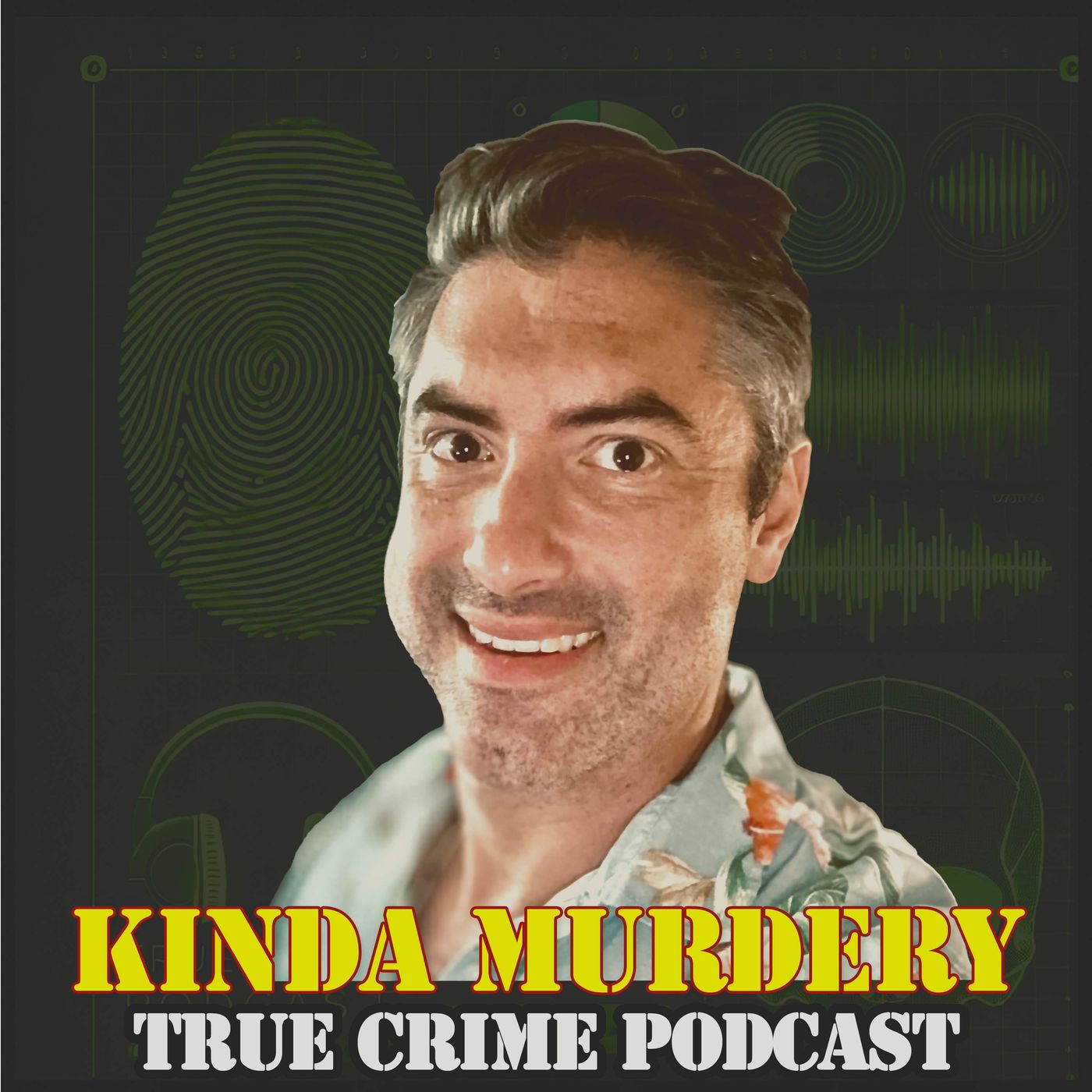
Zevon Odelberg is a true crime podcast host and disability advocate. Zevon has cerebral palsy and he wants Kinda Murdery to be welcoming community for people with disabilities and for people living with challenges of any kind. Life can be hard, but being together makes it better.
Speaker 1: Warning. Kind of Murdery contains adult themes, explicit language, and descriptions of violence. It is not suitable for anyone, and we recommend you stop listening. Now.
Speaker 2: True crime with a dash of the paranormal, the garish, the strange in the darkly comic. A podcast that's about more than just murder. It's my very own pocket dimension, home to a curated collection of bizarre and compelling stories, the unsolved, the unsettling, and the unbelievable. I cover it all just so long as it's kind of murdery.
Speaker 3: Hey, everybody, welcome. I'm really glad you're here. I look forward to hanging out with you every week, and I really appreciate you choosing to spend your time with me. So we're here today on part two of the Las Crusis Bowling Alley Massacre. That's right, I did say part two. So if you haven't heard part one yet, go listen to it and then come back and join us. I'll save you a seat. And if you're all caught up, well, then let's get right down to it. Part two of Kind of Murderies the Las Crucis Bowling Alley Massacre starts now.
Speaker 3: The call hits the fire department like any other at first, just another line lighting up, another voice on the other end, trying to get words out fast enough to keep up with what they're seeing. Smoke at the Bowling Alley. That's the message that gets through clean. Everything else comes in fragments. The dispatcher pins down the address, repeats it back, fingers already moving across the board, assigning units before the caller even finishes the second sentence. Engines are rolling out within seconds, midday traffic moving steady but not clogged, sirens cutting through it.
Speaker 3: As the first trucks turn in, they see it. Smoke pushing out of the building, not pouring out in a full column, but steady enough that you don't have to guess what you're dealing with. It's coming from inside, finding its way out through whatever gaps it can. The front of the Bowling Alley is still intact. No broken windows, no collapse, nothing that suggests the place is already given up. Just that slow, persistent push of smoke that tells you something's burning where it shouldn't be. The parking lot still has cars in it.
Speaker 3: It's the middle of the day business, open vehicles sitting where they were left, Nobody moving them, nobody pulling out. The first engine comes to a stop out front, the door's open, boots hit pavement, and the crew starts moving with the kind of pace that looks controlled from the outside but certainly isn't casual. They're on a mission. They're already reading the building before they get to it, watching the smoke, looking at the roof line, checking the doors and windows for any sign of where the fire's seated.
Speaker 3: The main entrance is still closed up, glass intact, no sign that anyone forced their way in or out. Smoke is collecting behind the glass, pressing up against the door, and then slipping out where it can. That tells the fire fighters that the fire's still inside, but it's getting bigger. They pull the line off the truck, drag it up to the entrance. One guy's feeding the hose, another flaking it so it doesn't kink. Someone's already reaching the door. Masks come up, straps are tightened down, air checked.
Speaker 3: No wasted motion, but nothing rushed either. You don't rush blind into a building you can't see through. The door gets opened, and smoke rolls out, thicker than it looked from the outside. It drops low spreads across the entryway, and for a second it pushes back against them before the air shifts and they move in. The line goes first, then the crew follows it, stepping over the threshold into a space that's already lost most of its visibility. Inside, the layout opens up, Bowling lanes stretch out into the dark.
Speaker 3: The front counters off to one side, seating scattered where people would have been sitting not long before. You can't see far, just shapes outlines the way the smoke hangs and moves when you step through it. The heat isn't sitting right at the entrance. It's there, but it's not concentrated. That tells the firefighters the fires deeper inside, further in past the front area, so they keep moving, staying low, following the hoses. It feeds in behind them, one hand on it, the other working the nozzle.
Speaker 3: Water comes on in short bursts as they advance, testing knocking back what they can reach, pushing toward where the heat picks up. Every step is deliberate. They're reading the floor under them, the air around them, adjusting. As they go outside. More units are pulling in, staging along the perimeter, setting up for back up lines and support from the street. It still looks like a contained fire. No one's coming out the front, no one's standing outside waiting to be helped. Inside, the first crew keeps moving forward into the smoke, closing the distance to wherever the fire is burning hardest.
Speaker 3: By the time the fire starts to give, the smoke inside the bowling alley thins out just enough for the crews to see past a few feet in front of them. Water has already been working the deeper part of the bowling alley, knocking down the heaviest heat. That heavy fist of hotness that was pushing back on them when they first stepped through the front doors has started to ease. It's still hot, still hanging in the air, but it's no longer the kind of heat that drives anyone out of the building. That's when the firefighters focus shifts, same movement, same pace, but now they're not just chasing the fire.
Speaker 3: They're seeing what the fire was hiding. The crew on the line keeps advancing, sweeping water across the floor, across the front counter, across anything that still shows heat behind them. Another team moves in, checking along the base of the counter, along the seating near the lanes, making sure nothing is burning underneath or behind, making sure that there's nothing that could flare back up. As the smoke lifts, the layout of the bowling alley comes back into view piece by piece. The front counter is the first thing that resolves clearly, the register area, the space where customers would have been standing.
Speaker 3: Beyond that, the seating along the lanes further back, the lanes themselves stretching out toward the rear wall. The outline sharpened as the air clears, and what the firefighters are moving through starts to look like a bowling alley again, not just a room filled with smoke. That's when they start finding people. It doesn't happen all at once. One firefighter moves past the counter and sees the first person on the floor near the front area. Another is found not far from the seating along the lanes.
Speaker 3: As they continue deeper, more come into view. They check each person as they come across them. That's automatic. Hands go to necks and wrists, checking for pulses, anything that tells them someone is still alive. But it becomes clear quickly that these people aren't getting up the positions of the bodies stands out. People aren't spread out the way you'd expect if this were only a fire. They're in specific spots inside the bowling alley, near the counter, along the seating further back toward the lanes.
Speaker 3: As visibility improves, those positions stay fixed, each one marking where that person was when everything stopped. The fire hasn't erase that. You can see where it burned and where it didn't. Sections of the floor are blackened. Parts of the counter show heat and smoke damage. Other areas the seating along the lanes, portions of the approach to the lanes are less affected. The pattern isn't uniform. More firefighters move through the bowling alley, now stepping around the counter, past the seating along the edge of the lanes.
Speaker 3: They're still calling things out, locations what they're seeing, short statements that carry across the space without slowing anyone down. Outside, additional units are staged, but the urgency is shifted. The fire itself is no longer the main problem. From the street, it looks like they've gotten control of it. Inside the bowling alley, the picture keeps filling in. Each section they clear shows more of the same, more people, same stillness. They're all dead, and there's no indication that anyone made it out once the fire started.
Speaker 3: By the time the main body of the fire is knocked down, the crews inside have seen enough to understand that this isn't just a fire that they're working. They don't stop. Water still goes where it needs to go. Hotspots are still checked along the floor and behind the counter. But the way they move now, how they look at what's in front of them, that's different, because at this point it's clear there's more inside the Bowling Alley than the fire that brought them through the door. Water is still running across the floor.
Speaker 3: When the first clear message comes out of the doorway, one of the firefighters steps outside, pulls his mask up toward his helmet, and leans toward the radio. He gives the address again, says the fire's been knocked down, then adds what they've found inside. There are people in there, several of them, and none of them are moving out. In the parking lot, the crews already staged here. It come through within a minute or two. Patrol cars start pulling in, easing around the engines, and the hose lines stretched across the asphalt doors open.
Speaker 3: Officers step out, and they start toward the front of the bowling alley, eyes already on the entrance. Smoke is still coming out through the doorway, thinner now but steady at the threshold. A firefighter comes out from inside and meets the police officers there. The exchange is quick, face to face, multiple victims, no signs of life, crews still working their way through the bowling alley. The officers don't go in. They stop at the doorway and look through instead. From where they're standing, the front counter cuts across their view, separating the entrance from the lanes behind it.
Speaker 3: Beyond that, as the smoke keeps lit, lifting, more of the bowling alley comes into focus, the seating along the lanes, the approach area, sections of the lanes themselves. One of the officers takes a step back and turns, raising his hand to the few people who've drifted closer than they should be. He walks them back toward the edge of the lot, putting more distance between them and the front doors. Another officer moves in the opposite direction, widening that space even further, making sure no one gets close enough to see inside.
Speaker 3: There's no crowd yet, just a handful of people who stopped when they saw the smoke and stayed when they heard the sirens. Inside the bowling alley, the firefighters keep moving forward. They step around the front counter, move past the seating along the lanes, and follow the edges of the lanes deeper into the building. As they move, they call out what they're finding, tying each location to something everyone inside recognizes front counter over here by the seating back near the lanes. Each call travels across the Bowling Alley, clear enough that no one has to ask where that is outside.
Speaker 3: More patrol cars arrive, taking positions along the edge of the lot. Radios stay active, passing the same information between officers. As supervisors come in, address number of people inside the fire. Nearly out, no one from law enforcement crosses the doorway. They hold there just outside, waiting for the firefighters to finish working through the bowling Alley before stepping in themselves. Once the fire is knocked down and the smoke lifts enough to see from the entrance to the lanes, firefighters move back through the bowling Alley, checking for any remaining hotspots.
Speaker 3: One crew works along the front counter. A firefighter runs a gloved hand across the countertop, then crouches and checks along the base where it meets the floor. He angles the nozzle down and puts a short stream of water along that scene, then shuts it off and feels along the same spot again before moving a few feet down and heating the process. Another crew moves along seating beside the lanes. They step from one seat to the next, bending down to look underneath, checking along the floor where debris collected.
Speaker 3: One firefighter lifts the edge of a seat, looks beneath it, then lowers it back into place, and moves on Along the approaches to the lanes. A firefighter walks the line where the flooring changes, stopping every few steps to check for heat. He places the nozzle close to the floor and runs a narrow stream across a darkened section, then cuts the water and watches the surface before stepping forward again. At the front doors, police investigators step inside. Once the firefighters clear a path, they move around the hose lines stretched across the floor and stop just past the entrance.
Speaker 3: From there, the front counter sits to the left. Seating runs along the lanes ahead, and the lanes extend toward the back of the bowling alley. One investigator walks to the front counter and leans over it, looking down at the floor behind it. Another stands a few feet back, scanning the same area from a wider angle. They step out from the counter into the open space between it and the lanes. Each dead body inside the bowling alley is left in place. The investigators walk around them, keeping distance, noting where each one is in relation to the counter, the seating, and the lanes.
Speaker 3: A camera is raised, photographs are taken from the entrance. The photographer steps forward, takes another set of photos closer to the counter, then moves along the same path the firefighters took, stopping at each position and taking additional shots. Near the base of the counter, one of the investigators kneels and points to a spent shell casing on the floor. A marker is set next to it, a photograph is taken. The casing is left where it is further back along the seating near the lanes, another casing is located on the floor beside a chair.
Speaker 3: It's marked the same way, photographed from multiple angles, and left in place. The police continue moving through the bowling alley, following the line of the lanes, stopping wherever something is found, Distances are measured from the counter to each casing, from the seating to the positions where people are found. Each measurement is called out and written down. In the area where the fire burned the most, investigators crouch and look at the floor. They follow the burn marks across the surface, tracing where the fire ran along the floor and where it stopped, noting how those areas line up with the rest of the bowling alley.
Speaker 3: Casings start coming off the floor one at a time. Near the front counter, a technician drops to one knee and leans in close before touching anything. He angles his flashlight across the tile, checking how the shell casing is sitting. Then he looks up long enough for the photographer to get one more shot. Only after that does he reach in, pinch the casing between his fingers and lift it straight up so it doesn't scrape across the floor. It goes into a small paper envelope the location called out before it's sealed.
Speaker 3: A few feet over, another shell comes up the same way, then another further back toward the seating along the lanes. They don't rush it. Each one gets the same treatment. Photograph, lift bag label, every step tied to where it was found in relation to the counter, the chairs, the lanes. The distances get called out as they go, numbers written down while the positions are still fresh. As more of them come in, the differences start to show. One of the casings from near the counter is held up beside one taken from the seating area.
Speaker 3: They don't match. One is wider at the base, the others narrower. The marks on the back where the firing pin struck don't line up the same way. They set those two down on separate evidence sheets. More come in same thing, some match each other, some don't. Before long, they've got them split into groups. Casings that share the same size and markings kept together, others set apart. Each group is tracked back to where it came from inside the bowling alley. Shell casings of different caliber tell investigators that more than one firearm was used in the crime.
Speaker 3: Once the casings are off the floor, they start looking at where the rounds ended up. Along the front counter. Small impact points show where bullets hit. The surface is chipped in tight clean spots, the edges darkened. Behind the counter. More impacts sit lower, closer to the floor, spaced out along the base. Each one gets photographed before anything else, A measuring tape comes out. One end goes to the floor, the other up to the impact point. The number gets called out, someone writes it down.
Speaker 3: Then they measure from the counter to the same spot, fixing it in the room out by the seating. Along the lanes, more impacts show up, one near the leg of a chair, another along the edge of the walkway. An investigator crouches there, looking from the floor up toward the counter, then back again, lining it up without touching anything. Further back along the approaches to the lanes, additional impacts appear, some low along the surface, others higher along the wood just beyond. Each one is marked, photographed, and measured.
Speaker 3: Nothing gets moved without that process being completed first. By the time they're done working through that stretch of the bowling alley, every casing in every impact point is tied to a position counter seating lanes with distances written down, so the whole thing can be laid back out later exactly the way it was found. Another investigator comes up beside him and looks at the same area. They don't touch it. One of them points tracing the edge of the darkened section in the air, then stands and calls for a photograph.
Speaker 3: The photographer steps in, takes a wide shot that captures the approach and the adjacent lanes, then moves closer and takes a second set focused on the dark area itself. A few feet away, closer to the walkway that runs behind the seating, a different investigator is working along the floor. He stops near a spot that hasn't been marked yet, crouches and angles his life light down. Something catches the beam. He leans in, looks for a second, then lifts his hand slightly to get the attention of the others.
Speaker 3: They come over one at a time. On the floor, just off the edge of the walkway sits another casing that hadn't been picked up in the earlier path. It's handled the same way as the others, photographed in place. A marker set beside it, then lifted carefully and sealed in its own envelope with the location called out. Near By, along the base of the seating, another area draws attention. The material along the lower edge shows heavier burn than the surrounding sections. One of the investigators crouches and looks along the base, following the line where the burn is strongest.
Speaker 3: He shifts a few inches at a time, tracking where it fades out and where it picks up again. He calls out for measurements. A tape is stretched from the seating to the edge of the burn, pattern the distance read aloud and written down. Another measurement is taken from the same point back toward the lane, fixing it within the space. They continue along that line, marking the start and end of the heavier burn, building out a clear picture of where the fire concentrated. Behind them, closer to the front of the bowling alley, other investigators are still working through the earlier areas, double checking positions, confirming measurements, making sure nothing was missed the first time through.
Speaker 3: In the back, the last section of the lanes and the surrounding floor are checked the same way as the rest. Lights angled low eyes moving across the surface, stopping wherever something stands out. When they reach the far end, there's nothing new to mark. They turn and walk back the way they came, following the same path through the bowling alley, stepping around the markers. The measured points and the area is already photographed. By then, most of the physical evidence inside has been identified, marked, and either documented in place or collected, each piece tied back to a specific point in the building.
Speaker 3: Across town, a sedan rolls to a stop and the hospital parking lot and idols for a second before the engine cuts The driver. Mid forties gray, starting at the temples tie, loosened and pulled slightly off center, sits there a moment with one hand still on the wheel. Then he reaches into his jacket, pulls out the folded slip of paper, checks the name again, and tucks it back. His partner is already out of the car by the time he steps on to the pavement. Late twenties sleeves rolled a small notebook in his hand that he hasn't opened yet.
Speaker 3: He shuts the passenger door with his hip and looks toward the entrance to the hospital. They head inside. The front desk is busy, phones ringing, a nurse speaking quietly to someone across the counter, Another staff member moving quickly with a chart tucked against her chest. The older detective steps up, shows his badge and gives the nurse a name, Melissa repass The nurse turns scans aboard behind her, then looks back. She's in surgery. The older detective nods once. What about the others from the sea.
Speaker 3: The nurse checks again, slower this time, Stephanie Sanak, she's stable, Ida Holgwin stable. Her fingers move down the list, Valerie Aran. She pauses, she didn't make it two years old. The younger detective lowers his eyes for a second, then looks back up, pens still cap in his hand. The older one doesn't react outwardly. Where can we find Sanak? The nurse points them down a hallway past a set of double doors. They move without saying anything else. The hallway is quieter, doors on both sides, some closed, some open just enough to show movement inside.
Speaker 3: Monitors sound off at regular intervals, steady and even. They find the room. An officer stands inside near the wall and steps back. When the detectives enter. Stephanie Sanak is propped up in bed, an IV in her arm, skin pale under the overhead light, but her eyes are open and tracking. The older detective steps to the foot of the ma'am. He says, voice low and even, I'm with the Los Crusus police. She nods faintly. I need you to tell me what happened inside the bowling alley? She takes a breath before she answers.
Speaker 3: Two men came in. The younger detective flips his notebook, open, pen moving, They had guns. What did they do? They told us to go into the office. How many of you seven? The younger detective writes that down underlines at once they walked us back there, she says, told us to get down. The older detective keeps his eyes on her, and then they started shooting. No pause, no change in tone, just the order. The pen moves faster. Now did they say anything, the older detective asks, just telling us what to do?
Speaker 3: Did you see them clearly? Yes? Can you describe them? She nods once, both hispanic, dark complexions. They spoke English. The younger detective writes each part down as she says it. The older one asks the next question, without raising his voice. After the shooting, what did they do? They went through the office looking for what money checks? Did they take anything? Yes? How much? I don't know? And after that, she shifts slightly against the pillow. They set the office on fire. The younger detective stops writing for a second, then adds it, where were you when they did that.
Speaker 3: The older one asks in the office. Did they say anything before they left? She shakes her head. They just left. The older detective stands there a moment, looking at her, then gives a single nod. That's enough for now. He doesn't press her further. They step back into the hallway. The younger detective closes the note book, presses the pen into the spiral. Two shooters, he says. The older one nods yeah. They start back toward the front of the hospital. Behind them, in another part of the building, a twelve year old girl is still in surgery after calling nine one one with multiple gunshot wounds.
Speaker 3: Ahead of them through the front doors, the parking lot is bright with morning light. Across town, the Bowling Alley sits under tape, the scene locked in place. Two men walked in. Seven people were taken into an office, then gunfire, money taken, fire set but Stephanie Sinak survived to tell the police about it. All right, We're gonna stop there, but please do join me next Wednesday. That's right, I'm moving the release date of Wednesday. Next Wednesday, April fifteenth, for part three of the Los Crusis Bowling Alley Massacre and hey if you know anybody that likes a good true crime podcast.
Speaker 3: A friend, a family member, somebody you bump into on an elevator, anyone, really, Hey, if you could tell him about the show, I sure would appreciate it, and I sure do appreciate you for listening. I'm Zevan Odelberg and this has been kind of murdery.
Speaker 1: If you like the show, please subscribe, review and tell your friends. You can find us on social media at Kinamurdery or email at Kinamurdery at gmail dot com
 Apple Podcasts
 Castbox
 Castro
 Goodpods
 Moon FM
 Overcast
 Pocket Casts
 Podbean
 Podcast Addict
 Podcast Republic
 Spotify