Memorial Day Special: "Mad Jack" Churchill
This is the story of John Malcolm Thorpe Fleming, "Mad Jack," Churchill, a swashbuckling British commando known to inspire his men with the bagpipes and carry a basket-hilted broadsword. Mad Jack's personal fighting style blended the modern with the medevil and he's the only man in WWII to kill a Nazi with a longbow...
CALL 888-MIURDERY, that's 888-687-3379 to share YOUR Kinda Murdery story and inspire an episode of the show!
Sources:
https://www.warhistoryonline.com/history/mad-jack-churchill-kill-enemy-longbow.html?D7c=1 https://www.historic-uk.com/HistoryUK/HistoryofBritain/Fighting-Jack_Churchill/
Become a supporter of this podcast: https://www.spreaker.com/podcast/kinda-murdery-true-crime-murder-stories--5496890/support.
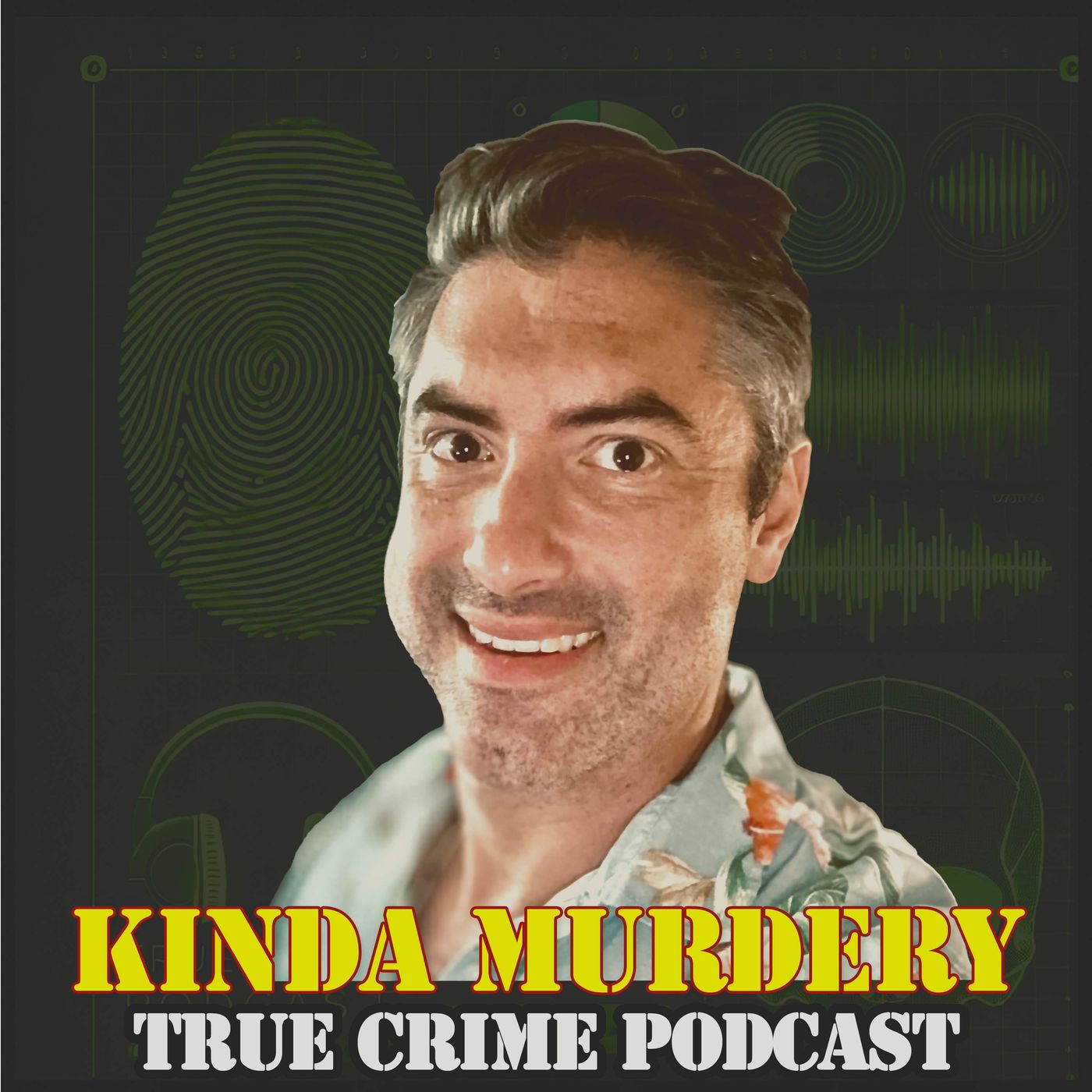
Zevon Odelberg is a true crime podcast host and disability advocate. Zevon has cerebral palsy and he wants Kinda Murdery to be welcoming community for people with disabilities and for people living with challenges of any kind. Life can be hard, but being together makes it better.
Warning. Kind of Murdery contains adult themes, explicit language, and descriptions of violence. It is not suitable for anyone, and we recommend you stop listening now. I'm Zevan Odelberg, and this is kind of murdery. Before we start today's story, I'd like to take a moment to recognize that it's Memorial Day weekend. On Saturday, my family and I, alongside Lahoya Boy Scout Troop five oh six, had the profound honor of attending ceremonies at Rosecrans National Cemetery and laying American flags at the graves of the fallen.
For civilians like me, Memorial Day is often more associated with fun times, barbecues, family vacations, and days off work in school, but it's vitally important to remember that Memorial Day is really about the sacrifice of servicemen and women of both American and Allied Armed forces. Sending of ingratitude to my good friends and Marine Corps veterans Chris Peppin and Trevor Bartlett, Army staff Sergeant William D. Norris and Lieutenant Commander Nicholas Fitzhand, and Captain Ben Wainwright of the US Navy in honor of Memorial Day.
Kind of murdery is taking a break from true crime. Instead, I bring you a different kind of true story, the story of a larger than life Scotsman, a veteran of the British Commando Forces, A man whose exploits seemed to blend both modern and medieval warfare, and whose unbelievable story you can believe because it's true. He's the only man in World War two to kill a Nazi with a bow and arrow. Kind of murderies mad Jack Churchill starts now. Mad Jack's motto was any officer who goes into action without his sword is improperly dressed.
He also added bagpipes and a bow and arrow to his prerequisites for battle. Jack Churchill was born in nineteen o six into a background that was typical for the period. His father held senior administrative and engineering posts in the Colonial Service, being based at various times in Ceylon and Hong Kong. The family was back in England in Dorman's Lend Surrey at the time of Jack's birth. Although his father's family came from Oxfordshire, his name, like that of his younger brothers, reflects Scottish Highland Ancestry.
He was christened John Malcolm Thorpe Fleming Churchill. Jack and his brothers Tom and Robert Churchill would all achieve fame from their exploits in World War Two. Like Jack, Tom joined the Manchester Regiment and then the Commandos, becoming a major general. Youngest brother, Robert, known as Buster, became a Royal Navy lieutenant, serving in the Fleet Air Arm. He died in action in nineteen forty two. Jack Churchill was educated at the Dragon School in Oxford, King William's College on the Isle of Man and Sandhurst.
In nineteen twenty six he was commissioned into the second Battalion, Manchester Regiment. This was the start of an adventurous career that began when he joined his battalion Rangoon and was sent to do a signals course in Puna. On completion of the course, he drove a Zenith motorcycle fifteen hundred miles across the Indian subcontinent, crashing into a water buffalo at one point in Burma. He used to cross railway bridges that had open sleepers by stepping onto the sleepers and pushing his bike along the rails while with his regiment.
He became an excellent bagpipe player under the tutelage of the Pipe Major of the Cameron Highlanders. He was also awarded the first of his service medals, the Indian General Service Medal, with Burma Clasp. Back in England, army life seemed dull and Churchill left in order to travel and build a career as an actor and entertainer. He is said to have had a role in the nineteen twenty four film The Thief of Baghdad, in which he showed off his archery skills. Having remained on the reserve officer list when war broke out, he was recalled to the Colors.
His regiment was part of the expeditionary force to France. Churchill used his bow and arrows while on patrol, knowing that the bow was an extraordinarily effective weapon in skilled hands, as it was silent and accurate up to two hundred yards. Jack was a crack shot with a rifle or a pistol, but he had a true talent for archery too. Before the outbreak of war in nineteen thirty nine, Jack was in Oslo, Norway, competing in the World Archery Championships. In nineteen thirty nine, The championship was in its eighth year and it still runs today.
But during the Warriors it did not run, and Jack Churchill had to find another venue to display his abilities as an archer. He took himself and his bow back to Britain. The fighting around the ancient port of Dunkirk in northern France in nineteen forty was some of the fiercest the British Army had seen all across Europe. The chaos of war was escalating rapidly. Countries fell, governments were replaced, maps were redrawn. The steady advance of the enormous Nazi war machine seemed unstoppable. It was during May of nineteen forty that Jack Churchill performed the Feet, which cemented his already growing reputation as mad or fighting Jack Churchill, and that's what they called him after that.
They were in a tower overlooking an empty little town. Jack was in charge of a small unit of men and they were preparing an ambush. An enemy patrol was due through the town at any moment. As usual, Jack was armed with a longbow, a broadsword, a bayonet and small arms. He fairly bristled with weaponry. There were two knives and an unusual looking revolver on his belt. There were grenades on his belt too. His small pack hid water, a little food, and a very comprehensive first aid kit. Ammunition pouches were strapped under the pack.
The quiver of arrows for his bow was strapped securely to the side. There was a keen look in his eyes, and the men around felt their fear lesson as they watched him. Mad Jack was not afraid. The orders had been given to the men at the base of the tower and to the men concealed in the surrounding streets and buildings. Mad Jack's tower would signal the attack. Through the rough opening and the floor of the tower flowed the loose, limbed form of the tall long bow archer. The bow itself was by no means a small weapon, being almost as long as the man himself, yet he negotiated the ladder and the hatch with ease.
Jack clinked and rustled as he moved forward to the parapet and peered over in the street ahead. The men of the enemy patrol appeared, moving at a quick trot. They were formed up into a tight column, and their weapons were held loose and ready in their hands. A young sergeant led them, looking suspiciously around, as if suspecting something. Jack stood up to his full height. Suddenly the bow was in his hand. I'll shoot the first man with this arrow, he said in a clear voice, read eight. The arrow he fitted to the bowstring was very long and very straight.
The point of the arrow was heavy and barbed. The feathering at the back was clean and neatly lipped. There were another nineteen in the quiver. In one flowing, practiced motion, Mad Jack took his stance, raised the bow, and released the deadly missile. The bowstring thrummed heavily in the tense air, and the arrow crossed the distance between Churchill and the sergeant at a terrifying velocity. The sergeant raised his eyes to the tower. He took in what was happening. In an instant. He was raising his hand and taking a breath to shout when the arrow hit him in the soft spot at the base of his neck.
He was dead before he hit the ground. Jack's tower was full of soldiers raising their rifles to their shoulders. There were soldiers in the buildings on either side. Sudden machine gun fire peppered the ground behind the patrol. They dropped, sought cover, tried to return fire, but they were pinned down by Churchill's unit. The man himself appeared with the sword in his hand at the bottom of the tower, leading a group of men with him. He sprinted forward, keeping his head down as he ran. Above him, the men in the tower provided covering fire.
He heard the machine gun again and a barrage of rifle fire. Then he held up his sword and yelled charge. The men around him began firing and yelling as they surged forward to engage the patrol, but Jack slipped to one side. He counted to ten. The patrol was fighting hand to hand and pressing forward against his unit. The suppressing fire slackened. Jack ran at full speed into the side of the press of enemy soldiers, vaulting a low wall and laying about himself with the broadsword. He felled three of the enemy before they were even aware of him, and another two as they were turning to face him.
Then he shot two at close range with the revolver in his left hand, and somebody shouted out in German and raised up a bit of white cloth. The German patrol surrendered, laid down their arms and were taken prisoner that day. Jack Churchill became a legend when his company was trapped after the Battle of La Epinay near Bethune. Churchill killed the first approaching Nazi soldier with his longbow, then he used two machine guns to fight back until the guns ran out of ammunition. He managed to get the remainder of his company to safety by leading them through the enemy lines at night, despite having been shot in the shoulder.
Churchill was a natural for the commandos, and in nineteen forty one he was second in command of the unit that raided the Nazi garrison stores and fish oil factories in Wagsoy, Norway. Sir John Hammerton, in his nine volume history of the Second World War, noted that Churchill encouraged his men by playing his bagpipes. In fact, Churchill leaped into action playing the March of the Cameron Men on the pipes and then hurled the first grenade before charging onward. He was wearing a basket hilted broadsword.
Some remarkable film footage shows both the raid and Jack Churchill playing his bagpipes on the deck afterwards, while the rest of the unit dances to a Highland Fling. Churchill was awarded the Military Cross for his bravery in battle during this raid and for his bravery in the Battle of L'epinay. The remainder of Churchill's war experience was just as astonishing. He led troops through Sicily during the Salerno Land, encouraging them as always with the sound of the bagpipes. Using just his sword.
He was responsible for the capture of forty two German troops and a mortar crew. Although recommended for the Victoria Cross, he was actually awarded the Distinguished Service Order twice later, he fought in the Yugoslavia, where he was captured and sent to the Sachsenhausen concentration camp. He is said to have been playing will Ye No Come back Again on the bagpipes when a grenade exploded nearby, knocking him out. By this time, Jack Churchill was a colonel, and his captors assumed at first that he was related to Winston Churchill.
He received no preferential treatment, though, but was chained up in a cell with various Austrian dignitaries like a real life Steve McQueen from The Great Escape. Churchill tunneled his way out only to be recaptured and sent to a pow camp in Austria. Unsurprisingly, he managed to escape again and then walked across the Brenner Pass to Italy. Churchill nearly served in the Pacific too, having been sent to Burma, where fighting was intensified. However, by the time he arrived there the war was over, prompting his oft quoted comment, if it wasn't for those damn Yanks, we could have kept the war going another ten years after the war, Churchill served with the Sea fourth Highlanders and then the Highland Light Infantry, saving the lives of five hundred patients and staff at the Hadessa Hospital near Jerusalem.
On his return to England, he became involved in the Army Apprentice's scheme, refurbished steamboats, and continued motorcycling. When on his way home on the train from one of his jobs, he used to take passengers by surprise by suddenly flinging his briefcase out the window. What they didn't know was that he was aiming it accurately into his garden as the train passed at home. According to his son, he was a peace loving and unassuming man. People are less likely to shoot you if you smile at him, was another of Mad Jack's favorite sayings.
To those who fought beside him, Jack Churchill seemed like a man without fear, but to those he faced in combat, he was a terror, a fying figure. Few could withstand him at close quarters. He moved quickly and quietly, workmanlike and efficient, most often with a basket hilted broadsword in one hand and a rifle bayonet honed to a keen edge in the other. The combination of sword and bayonet suited him. He practiced hard and used his skills at any opportunity. Mad Jack Churchill lived to be eighty nine years old.
His last years were spent in the warm and pleasant county of Surrey, in the south of England, where he died in nineteen ninety six. And that is the story of mad Jack Churchill. Once again, on this Memorial Day weekend, I would like to offer my sincere gratitude to all members of the US and Allied Armed forces, past, present, and future. Thank you again for choosing peril so that the rest of us can take safety for granted. Now quickly, before I let you go, I wanted to take a moment to remind everyone of the free three digit lifeline number nine eight eight that you can call anytime, twenty four hours a day, seven days a week to receive immediate counseling for substance use, mental health or suicidal thoughts.
So God forbid, but if you find yourself in a cute crisis, please do call nine eight eight. Program it into your phone now, and please always do remember that you are loved and the world is a better place with you in it. If you have a story you'd like to share, you can reach out to the show kind of Murdery at gmail dot com, at kind of Murdery on all social media, or you can call the kind of Murdery hotline eight eight eight Murdery. That's eight eight eight six to eight seven three three seven nine.
And if you enjoy the show, I surely would appreciate it if you'd take a moment to leave us a five star review wherever you happen to listen, I do hope you've enjoyed the story of mad Jack Churchill. Thank you so much for joining me until Thursday. Zevan Odelberg, And this has been kind of Murdery
 Apple Podcasts
 Castbox
 Castro
 Goodpods
 Moon FM
 Overcast
 Pocket Casts
 Podbean
 Podcast Addict
 Podcast Republic
 Spotify