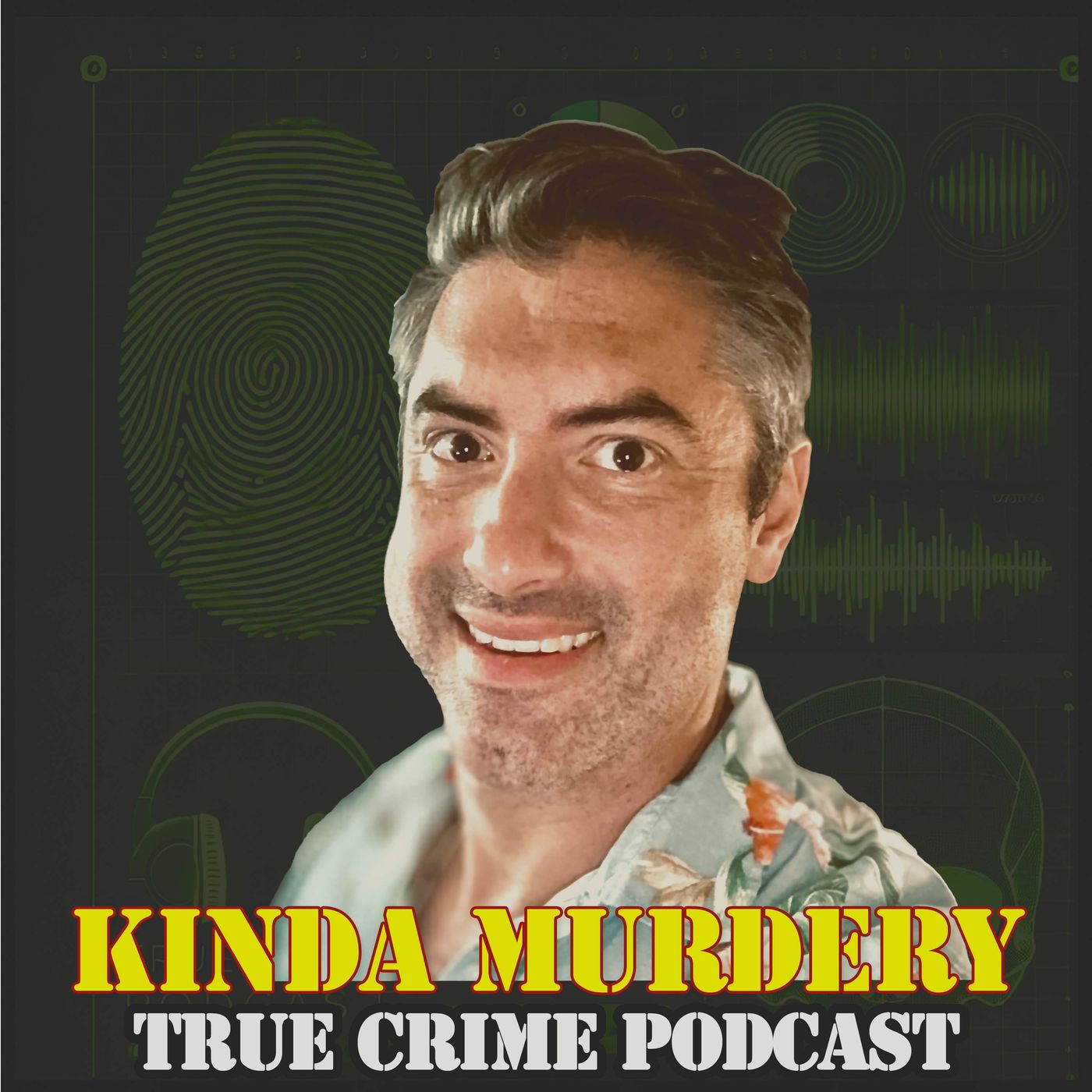
RIP Mahbod Moghadam
RIP Mahbod Moghadam you are so RAD and you are so MISSED.
CALL 888-MURDERY, that's, 888-687-3379, to share YOUR Kinda Murdery story or your story of living with a disability or other challenges, and you could inspire an episode of the show!
Become a supporter of this podcast: https://www.spreaker.com/podcast/kinda-murdery--5496890/support.
Zevon Odelberg is a true crime podcast host and disability advocate. Zevon has cerebral palsy and he wants Kinda Murdery to be welcoming community for people with disabilities and for people living with challenges of any kind. Life can be hard, but being together makes it better.
Warning, Kind of Murdery contains adult themes, explicit language, and descriptions of violence. It is not suitable for anyone, and we recommend you stop listening now. True crime with a dash of the paranormal, the garish, the strange in the darkly comic. I'm Zevan Odelberg, host of kind of Murdery, a podcast that's about more than just murder. It's my very own pocket dimension, home to a curated collection of bizarre and compelling stories, the unsolved, the unsettling, and the unbelievable. I cover it all just so long as it's kind of murdery.
Hey, everybody, thanks for being here. Just like it says the intro, I am Zevan Odelberg, and this is kind of murdery. You know, it's been an emotional couple of weeks for me, my close friend from college and a great friend of the show. The infamous, notorious, brilliant, kind, irreverent, hilarious, The list goes on. Really. Tech founder Mockbood Mogadam passed away in March, and I found out he was gone on April third, which also happens to be the birthday of another dear friend roommate and profound influence on my life and on this show.
Actor Nicholas Tucci, star of the cult hit horror film Your Next, who was also taken from us far too soon four years ago at the start of the pandemic. Finding out about mockled on Nick's birthday, when my mind and heart were already full with the bittersweet pain of remembering Nick, sent me into something of an emotional tail spin over the past week. Nick was thirty nine when he left us in twenty twenty. Maklood was only forty one when he shuffled off the mortal coil just a few weeks ago. Both were taken by cancer, and both had so much genius still to offer the world.
They were far too young, and the time worn cliche only the good Die young feels more precient and true than ever. Cliche is generally viewed as a derogatory term for an overused sentiment, but sometimes I think certain sayings become cliche by no fault of their own, but rather because they are persistent, recurring truths, and the cliches that expressed them are the simplest, and perhaps somewhat counterintuitively, the most elegant way of describing something that all of us experience and know to be true.
So yes, only the good die young, and Nick and Mockwood were far too young, and despite their often brash public personas a quality that they both shared, both Nick and Mockbud had truly loyal, generous, good hearts, two of the best hearts I have ever known, and I will miss them both very much for the rest of my life. But although both friends were dear to me and now will be forever linked in my mind and heart because of the time we shared together in college, and also because I learned of Mockbud's passing on Nick's birthday.
Right now, it's Mockwud who is in the forefront of my mind, so I'd like to talk to you a little bit more about him. We both graduated from Yale in two thousand and four. He would go on to Stanford Law School, while I moved to Los Angeles to pursue a career in the entertainment industry. While still at Yale, Mockbud and his friends founded a company that you may have heard of, called rap Genius. It's now just called Genius, but rap Genius was an annotation website where the community and also artists themselves, could annotate, elucidate, explain, and expand upon the meaning embedded in rap lyrics as though they were great works of literature or poetry, which in many cases they are.
Eminem was actually one of the first investors in and artist contributors to the site, annotating many of his own songs. Now rap Genius eventually expanded beyond hip hop and is now just called Genius. Mockbuod was the soul and voice of the Rap Genius community, and it was his larger than life personality that gave the site and the brand its swagger. After founding rap Genius, Mockwood became a major figure in the blockchain and crypto arena, supporting companies like Coinbase and going on to found additional unicorn tech companies, including av Repedia and Helidoge.
Now Heli Dooge is a social media site kind of like a Facebook Twitter combo, where instead of user generated content making money just for the site, users are paid in dogecoin for their activity. And back in two thousand and two, in kind of Murdery's infancy, Mockbood and Helidoge were kind enough to sponsor my show at the time when kind of Murdery was too small to draw interest from sponsors or advertisers. Mockboot, or Maboo, as I and other friends affectionately called him, was always one to court controversy.
He famously feuded with Warren Buffett over Buffett's hostility to bitcoin and crypto Sasha Baron Cohen, who tricked and bullied mock Boot into humiliating himself under false pretenses, which, if you ask me, tends to be Baron Cohen's recipe for comedic success. As you might suspect. Although I did laugh my ass off at Borat, I'm not a big fan of Cohen. I feel that he tends to trick people, exploit their better impulses, their willingness to give a stranger that benefited, the doubt, and the natural desire to please someone holding a camera, and then after he's bamboozled the people, he vilifies them and presents himself as a moral crusader, all to basically make money.
Yuck, but I digress. In addition to Buffett and Cohen, Mockbood also feuded with Mark Zuckerberg, Ben Horowitz and others, and he was vilified by some across the Internet for a brilliant, hilarious and satirical although not everyone thought so. Essay he wrote about how to shoplift from Whole Foods. There's a link in the show notes, but the article has been removed because of the ensuing legal uproar. Now in May of twenty fourteen, Mockbood was forced out of his position at Genius, the company he founded and was the heart and soul of.
Some of this is my opinion, but hey, it's my show, so he was the heart and soul of it. And if you check out Genius today, the current iteration pales in comparison, both in value offered and fun when compared to the original rap Genius site, and it has since Mockbood left. But he was forced out of Genius by his friends and co founders after he annotated the manifesto of the UC Santa Barbara Ila Vista shooter within days of that horrific event. His annotations included many irreverent and tasteless jokes and observations that were completely inappropriate and even vile, especially in the immediate wake of such a terrible tragedy.
But that one act, that one abuse of his freedom of speech, I suppose you could say did not encapsulate who Mockbood was. In fact, just a few months before the annotation, in November of twenty thirteen, Mockbood had surgery to remove a recurring brain tumor. It was the return of this same brain tumor that ultimately killed him just over a month ago. Now, I've known Mockbood since two thousand and three, a decade before the brain tumor first appeared, and I can tell you with absolute certainty and no rose colored glasses, that the brain tumor certainly changed his personality.
While he was always bold and irreverent and unafraid to ruffle a few feathers, after the brain tumor, it was clear that his ability to self filter, his impulse control, his ability to regulate the public output of his brilliant mind had changed. He was not as fully in control of himself and his thoughts as he once had been. Hardly his fault because of how obvious this was to me, It made me angry when his friends, people who knew him far better than I did, forced him out of his company following those admittedly terrible annotations.
His friends should have known that those annotations grew out of mock Bood's medical challenges and sought to help him rather than discard him. This is a persistent theme in our cancel culture, crazy society that really upsets me. Although I haven't talked about it recently, if you've listened to the show for a while, you know that I have cerebral palsy and that I advocate for both people with disabilities and those facing mental health and emotional struggles. I think we can all agree in a vacuum, at least, that someone facing mental health challenges deserves compassion and help, not vilification and attack, certainly not personal or professional destruction.
I'm not a doctor, so I'm not asserting that Mackboot had mental health struggles per se, except as I said that it was clear to me as his friend, that his brain tumor changed his personality and made him a little bit more of a loose cannon than he was before. So while at its core it's more of a medical challenge, I think in this case it's fairly safe to say that the brain tumor equates to mental health, and I feel like I see it all too often, especially online, but also in real physical life that when somebody does something quote unquote cancelable or expresses something reprehensible, and it seems obvious to me that that person is struggling with mental health issues and should be helped treated with compassion, understanding, and empathy.
Instead, in our collective rush to assert our own moral superiority, the person is just destroyed and branded a monster, depicted as someone with true evil in their hearts, when in fact they're just a human being waging the battle we all know is life and fighting an illness that obscures who they really are. As Mackbood's friend, it was always clear to me that this was the case with him, and that his many online detractors were far more interested in virtue signaling than in understanding a sin for which they certainly are not alone.
In the months before he died, I saw people online talking shit about mackboot not trolls, but people who knew him, people who had been his friends. But then when he died, I saw those same people posting about their fond memories of him, grasping, in my opinion, for their own fifth teen seconds of cultural relevance. This pisses me off so bad. What in the world could possibly be more obnoxious than narcissistic moral superiority. Of course, we have social media Twitter, Facebook, Instagram, whatever, and those companies are all founded, funded by have revenue driven by exactly that people's narcissistic moral superiority.
So there you go. That's the gross price of living in the quote future unquote, I guess. But while I do believe that Mackwood's battle with the brain tumor affected how he presented and communicated, who Mackbood was to me never changed. And let me tell you about who he was. He was a good friend. He was passionate, he was cool. But for all his apparent cockiness, he was not self obsessed or egotistical, or judgmental or unkind or any of those things, at least not to his friends. I think we all know that in these times of fractured attention that we live in, it can be hard to communicate regularly, even with close friends family.
You text someone who knows when they'll text you back. You call someone who knows when they'll call you back. And too many people curate their friendships like they're an expensive watch collection or something, constantly evaluating whether or not someone is worthy of their exotic menagerie of relationships. Mockbood was not like that at all. I thought he was cool, He thought I was cool. We liked each other, We were friends, and that was that. Even at his most notorious and successful, when he was hanging out with rappers, attending Kim and Kanye's wedding, and his various startups were receiving tens of millions of dollars in venture capital funding.
If I called Mockwood, he answered or called me back shortly thereafter. If I texted him, he replied. If I asked for his advice on something, he took the time to give it to me, thoughtfully and heartfelt. Mockbood always made time for the people he cared about, and he never big timed in quotes his friends. That is so incredibly rare anywhere and in any walk of life, but in Los Angeles, Hollywood, Silicon Valley, and entertainment tech in Crypto, it is so as to be almost nonexistent mythical. Even mock Bood's beautiful mind, heart and the importance he put on being available to and being there for his friends made him a true unicorn, just like the companies he founded.
And I will miss him very much. Oh did I mention he was also an accomplished classical pianist. Check out his Instagram reels if you want to hear him crush some boch and so. Today, in honor of Mockbood's amazing life and the amazing person he was, kind Of Murdery is replaying the episode he guessed it on in twenty twenty one. This is an episode from season one of the show, when it was formatted a bit more like The Howard Stern Show, and I always had guests to interview as well as a crew of additional regulars to toss comments from the peanut gallery.
So it's a bit of a different format than what you're used to if you're new to the show. But I think I hope you'll enjoy it, and I hope you appreciate the opportunity to spend some time with mock Bood just as much as I did every time I had the chance rip my friend. So if you're ready, please join me kind Of Murdery's visit to Olanja, California with mak Boodmogadam starts. Now, Hey, everybody, and welcome to kind Of Murdery Season one. Ghost Towns of the Mojave Desert. I'm your host, Zevin Odelberg.
Thanks for deciding to be here today we explore the Mojave ghost town of Olancha, California. Located on the junction of the one ninety and the three ninety five on the eastern slope of the Sierra Nevada in the Owens Valley, is the town of Olancha, California, founded in eighteen sixty by Minard Farley, who discovered silver in the nearby Costco Range. Olancha got its first post office in eighteen seventy, which seems to mark the official beginning of all of our towns. Fast forward to August nineteen sixty nine, when Manson family members Charles Tex Watson and Diane's Snake Lake moved to Olancha two days after Lake murdered Sharon Tate.
Lake was shortly taken into custody in Independence after Olancha residents complained to authorities about her swimming in the nude, but they didn't know yet that she had murdered Tate, so she was released, and a few weeks later she and Texts moved to the Manson family's final hideout in Death Valley at Barker Ranch. In nineteen eighty three, the Navy accidentally dropped a dummy missile right near Olancha that sunk into the swamp and disappeared. I think you guys get the idea clearly. The approximately two hundred residents of Olancha, California have endured a one hundred and seventy year history of being kind of murdery, pretty darn murdery, and absolutely positively super duper murdery.
All right, welcome to kind of murdery, everybody. I'm here today with the great Adam Vulrich. How you doing today, Adam, Oh, I'm absolutely fantastic. How are you use? Evan so good? I'm also here with Sean Christensen from Criminal Content. Sean, how's it going, farewell? How about you doing well? Doing well? I'm here as well with Bear Brendan Hubbard. How are you Bear? Stick and Saucy? And of course I am here with Oracle of the Digital Future, founder of Genius and Avipedia, the Crypto King, the Baron of Bitcoin, the Angel of Ethereum.
It's the Evion Don mac Bood Mogadam A Macbood how you doing, buddy, Yo, I'm feeling murderous. All right. Well, then you are in the right emotional space, my friend. Yeah, we're off to a good step. Awesome. So, you know, Macwoud, I wanted to ask you, what have you been What have you been up to these days? What kind of projects you're working on? Where's your focus? I mean, you're you're sort of famous for I wouldn't call you a unicorn hunter, You're more of a unicorn builder. You're you're a bit of you got that Midas touch in terms of finding great tech startups and bringing them to the world.
So where's your mind focused right now? Right now, I'm trying to murder the banks and I've been into bitcoin since twenty thirteen, all right, man, So other than the rypto focus, you got anything else in the hopper? What's keeping you busy right now? Or is it just evangelizing for crypto? It's all crypto. It's all crypto, you know, the companies that I've been working on for years now, it's all basically just trying to make the crypto ecosystem work. Because what I'm excited about about crypto is not just being able to use it as money, but being able to use that as money to pay people on the internet.
You had some interesting interactions with Mark Zuckerberg, and weren't you feuding with Warren Buffett for a while? Is that is that a real Is that a real thing? Or am I making that up? Buffett? I still don't like, just you know, everyone else is catching up with me now. You know. When I started beef with Buffett, bitcoin hadn't even been invented yet, and then him just coming out as the exactly how you'd expect. It's like, it's like if he didn't exist and you were just writing writing him into a script.
He decided to be public enemy number one of bitcoin. He can't say, like, I don't understand this, I'm going to let it slide. He came out his famous quote as he said, bitcoin is rat poison, and I was like, yeah, so that probably means that you're the rat. Oh gosh, well, his his entire you know, reputation is built on analysis of sort of traditional fundamentals of companies, So I can see how something new and cutting edge could be perceived as a threat to that. Perhaps, I mean that might be where he's coming from.
Yeah, he's fake he's selfish. You know, the reason he hired the gecko is because the actors all went on strike in the seventies. Wow, So when the actors want to strike, he decided, I'm just gonna hire a cartoon gecko. So that really tells you all you need to know about that guy. That makes me want to know who the actor is who does the voice of the cartoon get Goo. Yeah, we need to blacklist him. You should start at NFT called Buffett. Yeah, no one else is going to do. You can just you can sell his famous quotes as NFTs.
All right, Hey, well you guys ready to get into the town of Olancha, California. Let's do it. Let's launch it. Taking a quick look at the itinerary here, it's clear that Olancha, California has plenty of attractions for kind of murdery tourists like us. First up, it's the case of the Missing body or a hole with trees all around. Next, we've got American psycho Patrick Bateman meets the Great Escape, a story of evil, rage and admittedly a little genius and a lot of gross gear up for Stephen Leslie Wilson.
And finally, a tale that would be tall for anyone else, but it's true for him. Superhuman pilot survivalist Peter Delio. All right, So first up, in case the missing body or a hole with trees all around, frame this for you guys a little bit, This tale of Evans versus more. What it really is is the darkest version of much ado about nothing ever, and I'll get into why that is. So here's what happens. On the night of January sixteenth, nineteen forty seven, World War two Pacific theater veteran and X boxer Evans shoots and kills Los Angeles Deputy Marshall Frederick Moore.
A man hunt ensues and Evans is arrested two days later in Olancha, where he readily confesses to the murder. There's only one problem, the rid of Habeas Corpus. There's no body and even Evans doesn't know where it is. So what the heck is going on? I want to start this story by telling you a little bit about the victim. Los Angeles Deputy Marshal Frederick Moore is a man who commands a lot of respect. He's a World War One veteran and he was a war reporter for the San Francisco Chronicle during the Russo Japanese War.
He wrote several adventure books, and he was the editor of Argacy magazine, which was like a pulp fiction and pulp news magazine. He was editor of Argacy for eight years. Then in his approaching golden years, he moved from San Francisco and he's semi retired in Los Angeles. Now, you know, even when you're semi retired, you need to keep busy. It's nice to have a little bit of income. So he becomes a Los Angeles Deputy Marshal and on the side, when he's off duty, he works as a custodian at two different restaurants owned by a man named Frank Madras and his wife Eleanor.
Now Eleanor has a brother named Edward H. Evans, and Evans was mentally unstable. He was suffering from shell shocked due to what he experienced in the war, and beyond that, he was a retired described as mediocre boxer, which means that he was both shell shocked and punch drunk. So Evans has not that surprisingly a checkered past. In addition to the mental strain of wartime and too many punches to the head. He was married to a woman named Alice Adams. They had a son together, but they divorced in nineteen thirty eight.
By nineteen forty, he's in the hospital in Honolulu battling a brain infection and being treated for alcoholism. So this punch drunk, shell shocked, alcoholic and veteran, you know, and somebody for whom I have some sympathy for a lot of reasons, but not so much for this particular one, which was he was the one who shambled into Missus Madras's restaurant that night in nineteen forty six to meet more for the first time. So this is the story of that meeting. This guy sounds like he's Logan Paul's ancestors.
Oh my gosh, did you watch that fight? Yeah kind of, I watched it on I watched it on Twitter. Fight in quotes, Yeah my gosh, what a show. So yeah, So he is the brother of the woman who owns the restaurant, and he comes in and he sees Frederick Moore working as as the custodian in the restaurant, and he just kind of immediately accosts him and starts talking a lot of shit to him. You know, he's a little bit not all there, but he's being very hostile, and More just kind of tries to brush it off, but he can't, and he even tells him, look, man, I'm a deputy Marshall.
And Evans can't really wrap his mind around the idea that the janitor at his sister's restaurant is also an officer of the law, and so he keeps giving him a hard time, and finally, finally More becomes concerned that Evans might become violent, and so he shows him his police side arm at this point, and the paper says that, you know, Evans understood the language of violence better than anything else. Evans backs down, but this spark of hatred towards More is lit in his mind. And perhaps that spark would have gutted out had he never met More again.
But he does and wait, why was More working at the restaurant? So it was just like it was a side job that he took for more income, sort of when he was off duty, he would work in these restaurants. And these were also restaurants located in two of his sort of beats as a police officer, you know, oft and off duty police officers will bounce at clubs or something like that, so so it's a little bit like that, except this was more of a diner, so there wasn't really bouncing that needed to be done, so he basically kept himself busy by helping the Madrases keep the place running, although it does seem like this is a situation where a bouncer would have been helpful.
Yeah, yeah, certainly, and he does, ultimately in that first encounter, bounce the brother out of there. Here's what happens next. On January seventeenth, the faithful day that Moore is killed, Moore's sister, Kathleen Finney, drives him to the Marshall's office where he checks into the Marshall's office and he hooks up with another marshal named Raber, and Rayber drives him out to Eleanor Madras's restaurant to drop him off for his custodial shift, and on the car ride, he happens to tell the story to Raverer of how he encountered the owner's kind of out there brother, I mean, and to him, it's a humorous story.
He's like, yeah, man, this this crazy punch drunk boxer guy you know, braced me in the in the restaurant, was telling me he was going to attack me, telling me he was going to kill me. You know, I told him I was a marshal. I showed him my gun and he backed off, and Raber expresses some concern to his friend, and Moore just kind of brushes it off and says, you know, hey, don't worry man, I can handle that guy. So basically, Rayber drops More off at about three o'clock in the afternoon. By six, Moore calls his sister says everything's going swimmingly and he should be home early that night.
Well, at seven o'clock in walks Evans, and Evans immediately sees More and flies into a rage again, and he runs over to him and he tells him he's going to beat the living shit out of him. Well, at the time, it's just Evans and Moore in the restaurant, but Eleanor Madras was in the habit of coming in to the restaurant just before closing, which was eight o'clock, so, as luck would have it, shortly after her brother comes in and starts threatening Frederick Moore, Madras herself shows up and she calms her brother down, and he hangs out for a few minutes, acting sort of friendly and normal, and then she hands the restaurant keys to Frederick Moore to close up, and she takes her brother home because Evans, her brother lives with her.
After she goes to bed that night, Evans, who apparently still just has this burning coal of anger towards Moore in his mind, he gets out of bed, he gets his thirty two caliber revolver, and he goes to look for Frederick Moore. Very cool behavior, yeah, exactly, just you know, Yeah, after your sister goes to bed, you grab a gun and go stock the streets to murder the stranger that you've threatened twice now for no apparent reason. And this is where the events get a little fuzzy. So Evans kills more, or so we think, and he then drinks an entire bottle of whiskey, attempts to hitchhike, but what can't get picked up, and so he finally catches a bus to Olancha from Pasadena.
He arrives at Olancha and then the next morning he shows up at his ex wife, Alice Adams house, and when she opens the door, his shit, face wasted, and his clothes are covered in blood, and he's rambling and babbling about having killed a man. Again very cool and normal. Yeah, it's yeah, it's neither of those things. And so, as I mentioned, they had a son together. That son is now fourteen. Over the mother's objections, Evans basically grabs his son by the hand, pulls his son into a bedroom of the house, shuts the door, and spends over an hour telling him this wild and rambling, sort of almost hallucinatory story of how he murdered a man.
Now during this time, of course, Adams gets very alarmed and she calls the police. So the police show up. Evans freely admits to killing Marshal Frederick Moore, and he just it volunteers, Yeah, I killed him, and this is the story he tells. He says, I found More and I asked him, why do you have to treat my sister so badly? Now there's there's no evidence whatsoever that he treats this More treats the sister badly. I mean More works in both restaurants that both that the husband and the sister own.
But Evan's story is he says, why do you have to treat my sister so badly. And at that point Moore put his hand on his gun, and so Evans, fearing for his own life, drew his gun and shoots more first. In a moment of clarity, he says, oh my God. He suddenly feels awful, and he says to himself, God in Heaven, I've killed a man, what have I done? And he actually, according to him, leans over and kisses the face of Marshall Frederick Moore. This is the story he tells to the police upon being captured.
But when they find him, his body and his mind are weakened by huge amounts of alcohol and no food and no desire to eat, so the police have a hard time getting him to actually focus on what happened those twelve hours before. So the next thirty six hours, the police drive more all over Pasadena looking for the body, trying to get him to tell them where the body is, and he wants to help, but he has no recollection of what really happened, and the best yeah yeah, wait, yeah yeah, please stop please, I mean, I mean, is it no recollection or is this like that other case be covered with the quote like not the non alcohol related blackout defense.
Yeah, yeah, yeah, right, the exactly the the no memory, psychotic break, I wasn't myself and I have no recollection of it. Well, the answer is that's not clear, except to say that the only one who insists that he murdered more is Evans. So if this is some sly way of trying to get out from under the murder, it's a strange sly way to do it, because nobody believes Evans necessarily murdered more except for Evans himself. Right, and there's no there's no body you said, correct the and the end they can't find it.
Okay, I got a theory here, I got a theory. Please please. All of this public fighting, this is all posturing. These guys are buddies. Moore has some problems. He needs to skip town, and so this guy has helped fake his death. I like that. That's very Sherlock home, that's very ConA and Doyle esque's. That's a good one. So here's so they drive him around and the best he can come up with is that I buried the body in a hole surrounded by trees. Basically, during this process of trying to find Moore's body, Evans has a complete breakdown, and so he is then sent to the Mendocino Hospital for the criminally Insane, the Arkham Asylum of the Redwoods, if you will.
And interesting side note, Adam, if you'll remember when we did the Gilbert Francis Colleague, this was the same place. Yeah, yeah, that's right. This is the same mental hospital that Gilbert Francis colleie escape. Here are they there at the same time. This is about This is nineteen forty seven, so no, this is some this is some thirty couple years later. Yeah. Yeah, I was gonna say, maybe we could have started our kind of motory legion of doom. Yeah, anyone who goes to that hospital, Yeah yeah, yeah.
And you know, I'm I'm from up in that area. I'm from Humboldt, which is the next county north from Mendocino. And there's a there's a university, a college up there, a city college called College of the Redwoods. So I guess it's just my own little inside joke to call it a Arkham Asylum of the Redwoods. So that's what you want to do on a podcast, is tell jokes that only you yourself understand the reference. That's a that's a recipe for success. So by October of that year, it's deemed that Evans is sufficiently mentally recovered to assist in his own defense and to stand trial.
But ultimately, when he goes to trial and he is cross examined by the prosecutor, he continues to maintain his own guilt, but still he cannot be any more specific than I buried the body in a hole with trees all around. And so ultimately the judge says, we have no body. We actually have no evidence. There's no way to prove that Frederick Moore is even dead. We don't know that he's dead, and so the case is dismissed.
Evans is innocent of this crime that he insists he committed. Did he kill someone else and then just assumed it was the guy he had grudgate? I know you were going to say that more just kind of returned to work the next night. Yeah. Yeah. It more like read that this guy confessed to his murder and he was like, all right, well I'll go on vacation for a bit. I didn't like him anyway, and then he comes back afterwards. Yeah, that's that is a mystery, because there's as far as I could tell more is in fact never seen again.
But he's just he's an adult person who has has disappeared and there's no evidence of a crime that they can make a stand up in court and there's a oh and you know they can't, like they can't connect the bloody shirt to him if there's no you know, it's obviously pre DNA in that. So exactly, that's it. That's interesting. So this is actually a situation. I feel like the most likely thing all these ideas were throwing out, really the most likely thing is like, yeah, this guy did kill him, but he that he he did such a good job of leaving no evidence and the cops did such a bad job of finding anything that they were just like, I guess there's no case here, right.
It's it's really it's really interesting because that almost implies what you were saying, Adam about is this just kind of a genius way to get out of a crime. Like if you if you kill someone and you can hide the body well enough, maybe your best bet is to preemptively, really strongly insist that you murdered the person, because then it was I mean, I feel like if they went to court with it right, So, I mean, the case is dismissed, but does that fool under then like double jeopardy, Like, does that mean that he's like innocent of that?
And if the INDI event they did find him, they couldn't try him, I would maybe I would think so. And that's this, of course, is why that's a really good way to get out.
But I mean, the writ of habeas corpus is much older than our legal system even and it basically just says there can be no murder with without a body. You must produce a body, otherwise people could accuse people of murder willy nilly. So this really came into uh, this came out in the favor of Evans in that way, although he, to his credit, I guess, really wants to be incarcerated for the crime. So maybe it didn't work out for him. But interesting to think that you can't just insist that you go to jail, because I've heard some people like they try to get back into jail just because they miss the dental care and stuff.
Yeah. And then the other one, and I've heard this from people who work in mental institutions, is that when you're institutionalized. She called it three hots and a cot. You've got an indoor bed to sleep in, and you've got three hot meals a day. And that's a better deal than a lot of people who are sadly on the streets might be facing otherwise. So the newspaper interviews a Pasadena policeman in nineteen fifty two, about five years after this happens, and what he has to say is that sometimes he sort of thinks back on this case and he asks himself what he has in terms of it being one of the unsolved cases of his career, and he says, all I've got is a hole in the ground with trees all around and a man who can't remember.
Yeah, he's got some bars. Nice, pretty good. Yeah. And that's the story of the maybe murdered Frederick Moore and the maybe murderer mister punch drunk, shell shocked Evans. Very nice. So interestingly, this story, guys, it has three elements that continue to reoccur in our murder stories on this show. Three things that we might almost call the DNA or the often DNA of a kind of murdery podcast murder. I bet you can guess what one of those is. Might it be a murder. Yeah, well, yea, indeed, this is the this is actually the DNA of the murder itself.
So the first one, of course, is the Mohave Desert. You know, all of our murders somehow involved the Mohave Desert. The second is a murdery and prodigious, least strong Napoleon in other words, a super short guy with almost superhuman freakish strength. We've run into that belief, indeed. And the third is killers with three names. Now it's not just us to know about that, but obviously everybody knows about John Wayne Gacy. We talked about John David Hinkley who shot at Reagan. We told that story about James Davies Rowan, the tooth fairy who killed the dog Man.
Well, here we go. We've got another killer with three names in Stephen Leslie Wilson. And this is a story that appeared in the La Times on August twelfth of nineteen eighty four. Also, not just three names, the three first names exist, right, three first names. A lot of the ones who they use their middle name. It's because the first and last name are too common, Like you can't just be John Smith. I know this because I used to make the wikis for killers. If we wanted to seo optimize, we would end up putting the middle name in the title.
Makes sense? So is it sometimes? Is it an ego trip for the killer wanting to differentiate themselves, or what you're saying is it's the people who are reporting or reporting the events news. You know, you can't just be like the murderer John Smith. So you say John Wayne Smith, got it. You can't just be the murderer Stephen Wilson. You have to be Stephen Leslie Wilson. Got it. There, we got it, mystery solved. That being said, I kind of I kind of enjoyed the mystery. Well, yeah, yeah, thanks for ruining the matt.
No, that was actually really I kind of I liked walking through life thinking anyone I met with three names might be a murderer. But oh my gosh, Yeah, so that's really funny. That was actually really good knowledge there. That's really it's really cool. Actually, I've got a weird name. So if I ever get convicted, God forbid, if I ever get convicted for murder, I'm going to insist that they give me a third name too. I like how you said god forbid you get convicted, God forbid you kill someone. Yeah, right, that's an important distinctions how to get out of it?
Now from the first story, So, what would be your what would be your serial killer middle name if you got to pick it? Mackwood n No, I'm kidding. I don't know, like Mahu Tupac or something. Tupac's your favorite rapper, right, He's my favorite everything. Yeah, it goes Tupac. Then Beethoven and Shakespeare, those are my top three. Let's get back to the story of Stephen Leslie Wilson. So a little background on Olancha, and you know, I want to be sure that I tell this story a little bit carefully because this this all happened, you know, starting in the eighty two, eighty three, eighty four, and I would presume that this family's is still out there, So bear with me or rain me.
And if anybody feels like I'm not being properly respectful to them, I often on this show we try to do historical stories from a really long time ago, so that there's really no risk of the person who this happened to listening. But anyway, with that little disclaimer, Olancha is home to a prominent ranching family named the Thornburghs, and specifically there are two. The two children of the Thornberg family are sisters Tracy and Callie Thornberg, Calli being the elder. And this story, the story of Stephen Leslie Wilson, is the story of the ex husband of the elder sister, Callie Thornberg.
So in the mid seventies, Stephen Leslie Wilson moves to Olancha and he gets a job at the Olancha talk Mill. So when he moves there in the mid seventies, he's about thirty years old, he's divorced, and he's the father of a school age son. And those are the sort of mundane details about this man. Here are the more interesting ones. He is fluent in Spanish, he's handsome and extremely charming when he wants to be. And he's also a prodigiously strong weightlifter and martial arts expert. And while they say that he can be extremely charming when he wants to be, it's in that sort of classic sociopath sense that he also is known to have just like a towering temper and fits of insane rage that people will describe as being the result of his over pridefulness another cool and normal guy.
Yeah, that's gonna say, I need a different middle name. Yeah, is your middle name Leslie? No, but I can feel the what you're describing coming, so, Brend. It's towering insane rages. Yeah. So Stephen Leslie Wilson likes to boast about his strength, and he'll show it off by lifting his coworkers at the talk mill with one arm. I bet they love that. Yeah. And like I said, this sort of intense narcissism coupled with insane rage and also the ability to be very charming, just just makes him sound like almost the stereotype of a Hollywood sociopath.
I mean, that's how I think you would describe Patrick Bateman or what is said about Ted Bundy or anyone else like that. So, but however crazy his temper might be, He's a nice enough guy to convince Callie Thornberg to marry him in nineteen seventy eight, but things go awry within months. They go arrive very quickly, and one of the pieces of evidence of that is also a great example both of how strong Wilson is and of how crazy his temper is. One of his talk milk workers tells a story about one time he saw Wilson fighting with his wife with Callie Thornberg, and Callie Thornberg had a brand new pickup truck parked next to where they were arguing, and he saw Wilson, in this fit of crazy, crazy rage, dismantle Callie's pickup truck with his bare fucking hands.
He said he ripped the seats out of the truck and threw them on the ground, and ripped the steering wheel off the truck and threw that on the ground, all with nothing but his bare hands. Wow. So he was so strong and so crazy angry that he became like a one man human chopshop, just tearing apart this truck. That's kind of hot. I mean, I guess it depends what you're into. So literally, within like months, Wilson and Thornburg's marriage falls apart and she moves back in with her father. Now, William Thornberg is the patriarch of the Thornburg family, and they have stature, and he's very well known and very well liked, and he's a classic cowboy hat wearing rancher, and he's kind of famous for wearing this giant silver belt buckle that says one hundred miles in one day, But apparently what the hundred miles in one day is is that there was an endurance horse race that he would participate in and win, where you ride on horseback for one hundred miles in one day.
So that's where this belt buckle came from, and he was known for wearing it everywhere that he went. So in spring of seventy nine, when Calli's marriage has fallen apart, as I said, she moves back in with her dad, and Stephen Leslie Wilson is insanely jealous of this. In fact, even before the marriage fell apart, he was insanely jealous of Callie's close relationship with her father. When she would go see her dad, he would stalk them, and he would sort of set up his own little sting not that far away, and he would watch his wife visiting with her dad.
So I mean, just really crazy toxic behavior there, yeah, right, And this of course gets worse when she moves back in with her father. So basically he starts, you know, actively stalking the father, and then he goes and he lays in wait for him in a hay field and the father comes out to the hayfield to work the hayfield, and Stephen Leslie Wilson abducts the father at gunpoint, drives him out into the desert, forces him to dig his own grave, then shoots him in the back of the head twice. Geez yeah wow, yeah.
And it's not until six months later that the disappearance of mister Thornberg is explained when authorities find in this drainage ditch a corpse wearing that famous one hundred miles in one day silver belt buckle. That's that's in October of seventy nine. So Wilson is then at large. So Wilson is he's big, and he's dumb, and he's angry. Yeah he's he's small, but extremely muscle bound, so he's yeah, he's he's got a huge amount of kinetic energy packed into So he's not the incredible Hulk, He's the like insufferable Bulk.
How about that? Yeah, yeah, I love it. That's great. The I wish I'd named this story of the Insufferable Bulk. This story is now called the Insufferable Bulk. Everyone, Thank you, Adam. Those types of guys, they have a certain person now it's like SpongeBob when he becomes suddenly like ripped, you know, yeah, yeah, yeah, the excess of testosterone. I mean it this behavior to me, it sounds like he was probably a roid head. I mean he's flipping out all the time and ripping cars apart with his bare hands.
He's probably and proud of his body. He's probably on steroids. But he is at large following the murder of mister Thornberg, who's discovered in October of seventy nine. He's at large until November of nineteen eighty one, where he is arrested at the airport in Vegas by the FBI. So, between seventy nine and eighty one, because he's on the lamb, he's gone from being a small town murderer to being a on the top most wanted list hunted by the FBI murderer. So he then goes to Fulsom Prison, the prison made famous by the Johnny Cash song.
Of course, he goes to Fulsom Prison where he is a model prisoner, where I guess he upt the charm. He's beloved by the guards, by the prison by the prison workers. He gets a job making seventeen bucks a month working the filing for the prison counseling office, because it said he had had the rare skill in prison of knowing how to type and work a filing cabinet. And he is then so well liked and good at that job that he is promoted to working in the warehouses, which that pays seventy five dollars a month and is considered like a you know, he's got like a c suite job in prison basically.
And now this is where remember at the beginning of the story, guys I said it was like The Great Escape meets Patrick Bateman. Yeah, well, he starts working in the warehouse. He's driving forklifts. He has access to tools, and he also has access to all the comings and goings and schedules for all of the delivery trucks. So he has ingratiated himself with the prison staff so much that they basically give him a job where they pay him to have access to all the information he would need to plan an escape.
Uh planning on that pop And you know, Stephen Leslie Wilson is not a man to let an opportunity pass. On August second, nineteen eighty four, at nine ten am, a red and white delivery truck pulls into fulsome about forty minutes earlier. The foreman had reported his tin shears shears used for cutting metal, had gone missing, but apparently on a busy day when there was a lot of work going on in the warehouses or on the loading dock. This was not an uncommon occurrence for things to go missing, so not much was thought of it.
It's also of note that guards generally did not supervise the work going on on the loading dock, so on this particular day, the work was being supervised by two what the paper calls free men, meaning not prisoners but civilians. Suddenly sort of out of nowhere, almost like one of those moments in a sci fi movie where like the machines rise up and attack humans. All of a sudden, three forklifts come sort of out of nowhere, about to converge on each other and crash into each other, and those forklift drivers narrowly avoid the crash, and it is thought later that Wilson somehow orchestrated this near crash of forklifts, although no one ever really knows how he would have done that, so there's some confusion.
As the forklifts are about to crash, and then they stop the crash, they clear it all out, and then at nine p forty that same day, the delivery truck is padlocked by prison guard it and it rolls out of the prison yard. It's a tense situation. Oh really, yeah right, I know. Police are sent to the truck yard where the truck is found still closed and still padlocked where where the uh guards had padlocked it on the outside. But the police cut the lock, pull up the back of the truck with guns drawn, and inside they find the sweaty blue denim shirt of Denis Leslie Wilson.
And they find that a one foot by two foot square opening has been cut in the roof of the truck with the tin shears, and Wilson is nowhere to be found. He's gone. He escaped. Wow. Yeah. It's worth noting that about fifteen years earlier, two prisoners had escaped fulsome in exactly the same way. They'd like, hidden under a prison bed in a delivery truck and managed to cut their way out the top of it. This exact escape had occurred fifteen years earlier. However, those two prisoners were captured within a couple months Wilson was not He is not caught.
He is not caught for so long that he becomes an episode of Unsolved Mysteries. You guys remember that show. Yeah, I'm reading it now. Yeah, it's amazing. Yes, yeah, So there he goes. He escapes in nineteen eighty four, and of course this article started and was written in nineteen eighty four on August twelfth, which was a few days after he had escaped. So the whole story I told you appeared in the paper a few days after Wilson had escaped, and it was shrouded in the understandable fear and terror of the Thornberg family in Olancha, because now this man who had murdered their father is on the lamb, and nobody knows where he is, but they know he's out.
CALLI his ex wife. At this point, she has remarried and moved away, but her sister Tracy still lives in Olancha, as does the rest of the family. And the reporter asked Tracy why she thinks that Wilson murdered her father, and what she says, I think is very telling about you know, the kind of sociopath he is, And she says I think he killed my father because we were a very close family and he just couldn't understand that. So he
remember, he's he's still out there. He eventually is captured eight years later in nineteen ninety two in London, England. Wow, shout out to Adam.
So that means he went from being a local Mojave ghost town of about less than two hundred residents killer to being an FBI Most Wanted to being an international Interpol manhunt. Wow. He's captured in April of nineteen ninety two.
In October of that same year, he's extradited to the United States and he is sent back to folsom Wait when when was the Unsolved Mystery episode ninety one ninety so? Was it because of that episode that he was caught? Yeah? Said he disappeared just before the airing of that episode. Interesting, did he like know the episode was coming out? Like someone tipped him off? It's a good question. Oh, you mean he was around and nobody was looking for him for that. He was living in Florida, apparently under the name Moyer, and then I guess something tipped him off and then he went to England and then his girlfriend is who the FBI followed Wow.
So in other words, they figured out retroactively that he had disappeared, because once they caught him, they realized the pseudonym he had been living under, et cetera. Got it. So he goes back to fulsom And this is still not the end of the story of Stephen Leslie Wilson. First of all, if it were me and I was running the justice system, I would not send him back to the same prison he'd already escaped from. But they do. Yeah, I would definitely send him somewhere a little most secue. So he he's back in fulsome in nineteen ninety two, and then in nineteen ninety four he applies for the right to be married, and it is granted.
However, what is denied is the right to have conjugal visit. It's with his new wife, and the reason it's denied is because under the law, if you are convicted of committing a violent crime toward a family member, you cannot have conjugal visits, which I think makes perfect sense. But not long after that marriage, some several months later, he is sent a small package by his wife, and inside that package are what is described as paraphernalia of escape, like she sent him a chocolate cake. Yeah yeah, they said, she said him a chocolate cake with a file in the middle.
And because of that, because this would constitute his second attempt to escape from folsomen of course, as we've just discussed, the first one was wildly successful. He is then sent to Pelican Bay, which is California's only super max prison, and it's in Crescent City, about eighty miles from where I grew up in Arcada, California, And that's where they send the absolute worst of the worst, like the organized crime head who can still run his organization from inside the prison. He's in Pelican Bay.
Again. The same person I referenced to, who I know, who spent a lot of his life as a convict, said that getting sent to Pelican Bay by lifelong prisoners was viewed as getting a big promotion in a corporation. Like if you got sent from Pelican Bay to Pelican Bay, you just went from that because only the hardest ass guys are sent there. So if you were part of a say a gang or or a mafia organization or any kind of criminal organization, if you ended up sent from Fulsome to Pelican Bay. It was like you went from being the VP of marketing to the CEO of the whole damn place in terms of the organization that you ran.
So as far as I know, and I couldn't find specific information on this, but Stephen Leslie Wilson is still incarcerated at Pelican Bay Penitentiary in Crescent City, California. Wow. Cool. All right, So you know, I think I called it something else in the itinerary, but in my notes here I have this story just labeled as crazy Pilot story, and honestly, there's really no better title for it than that. I want to say that kind of Murdery is entirely an entertainment podcast. Everything we say should be taken in that vein and not taken for as serious fact.
Because I'm going to tell a story about a man who's a real man, and he wrote a book about his experiences that was published by Simon and Schuster in two thousand and five. But even at the time, and it's this is reported in the newspapers, his accounts of how things went down were questioned quite severely, to the point that his lawyer asserted that it was having an effect on his mental health. So if I seem to suggest that I find his account of the tale to be unlikely, I'm certainly not the only one.
It's well documented that a lot of people felt that way. All right, tell us the Delio what the wo Yeah? Exactly, except so apparently this is what happened. On November twenty seventh, nineteen ninety four, Peter Delio is piloting a small plane over the Owens River Valley with his friends Waverley Hatch and Lloyd Mattsimoto. The plane crashes. Initially, all three passengers survive. It's late November in the Owens River Valley, its high altitude temperatures are freezing. Everyone sides that Peter, who is the least injured, should go for help.
So on December tenth, nineteen ninety four, that is, I think, thirteen days later, pilot Peter Delio walks into a launcher and he goes into a cafe and orders food, and he starts to eat it. And in that cafe is Lone Pine Airport employee John Pennington, who notes in the article that comes out in the paper later that Delio appears to be in good shape. The waitress, however, thinks he looks beat up, so she calls the police. Delio declines the ambulance and then goes and tells the police about his plane crash and his two other friends and that he's come here to help save them, but he also says that he assumed that they've already been rescued because he saw on his hike back he saw rescue planes flying low over the area where they crashed.
He refuses an ambulance. He says he's okay, and he doesn't initially tell anybody that, hey, you got to go rescue my friends, because, as he tells the police, I assumed that they were already rescued, which I found to be strange, to say the least. And I'll get to why it's so strange in a moment. So he then he leads the authorities to the crash site some twenty miles away, where it's found that Hatch has frozen to death. That's Waverley Hatch. She's frozen to death, and on a second autopsy, they determined that her back was most likely broken in the crash.
And as for Matsumoto, he has died from a crushed chest. By July of nineteen ninety five, so that this is six months later, Delio has appeared on Dateline, and the story that he tells on Dateline, and the story that he tells in his book, which is called Survive published by Simon and Schuster, is pretty different than what the the articles at the time when it happens suggest. Here's what the story is. Six months later, when he's on Dateline. Okay, he says that he crashed and that he was pinned in the plane with his arms stuck behind himself so he couldn't use his arms, so that he bashed out the plane window with his head.
Now, maybe the plane window was severely cracked in the crash, but I mean plane windows are really thick, really thick, really strong glass. So I'm picturing a guy, if his arms are pinned behind his back, he's basically bashing out a window with his face, which if anyone's ever gotten a cut on their head knows how profusely that bleeds. He then says, I had one useless arm, I had five broken ribs, and I had a severely broken ankle. So now the story is that with a presumably battered head and face, that he's used to bash out a plane window with one useless arm, with five broken ribs, and with a severely broken ankle in the middle of winter.
He walked twenty miles into o Launcha, but then, as told by witnesses at the time, his first act was to go into a restaurant, order some food and refuse an ambulance. I mean, does anybody else think that this story just begs belief? Or am I just an asshole skeptic here? I mean no, it'll sounds like complete bullshitrecomplete and complete and utter bullshit. First of all, if you walk by the way, this is through mountains in the dead of winter, if you walk twenty miles on a broken ankle, I can only let's say that you truly are like you know, trained like Wesley the Men in Black from the Princess Bride, and you can totally ignore the pain.
I would still think there would be sort of a level of swelling and edema and possibly infection and etc. That would make it a excruciating and be in need of immediate, immediate a medical attention, because remember he walked twenty miles over two weeks, so this, this broken ankle, and that wound have been festering and presumably getting worse with every step over the course of two weeks. Additionally, he says, besides mentioning that oh, I found a couple of cabins along the way to sleep in, but he says, I lived on bugs.
And here's where my BS meter really went off. I lived on lizards. Okay, So this very like fucked up guy with a smashed up face and only one arm and no ribs is running around in the desert catching and eating lizards, right, that's my story? Yes, so the yeah, I mean yes, now here, here's what I have to say about that. I am a pet owner. I own two lizards. I own a veiled chameleon and I own a bearded dragon. And as everybody knows, they're reptiles, they don't create their own heat, so they need heat to survive and to be able to move quickly.
So I guess the one part of this that's a little bit believable would be the idea that these lizards would not be fast this time of year. However, a lizard in the winter in the wild like that. Basically, they go into hibernation like bears. They go into like a tree hollow or under a rock, and they wait for themselves to freeze, and they basically go into almost like a suspended animation state until it gets warm enough for them to emerge and survive. They just self combonite. But yeah, like I actually do.
It's pretty amazing. That's amazing. I want to eat it. That makes me want to eat one, but it also makes me not want to eat well. So Delio claims to have had no survival training prior to this. Maybe he happened to know somehow that lizards hibernate under rocks and in trees. But to note that a you would so you would not have been seeing a lizard out in the open running about. You would have had to know to look into rocks or trees with your one working arm, And then when you found that lizard, you would have had to be able to eat it raw and alive, and while holding it with the one hand, tearing it to chewable size pieces with your teeth, and your presumably pretty damaged face and mouth that may have bits of glass in it because you smashed the airplane window out with your head right, And then, has anybody here besides myself ever had a bruis used rib, much less a broken one thankfully.
No, Okay, Well, a bruised rib is incredibly painful, like right, so beart, you know, incredibly painful. Let let alone five broken ribs. Five so, and yet he gets into town on a broken ankle, with all these broken ribs and only one working army by hunting and finding lizards in tree hollows and under rocks that he eats while frozen and still alive with his broken face. So I'm not gonna say this about Peter Delio because I don't want to slander anybody. But if if this, if these exact string of events had happened to any other person other than Terminator Robot and superhero Peter Delio, you would think that they were exaggerating their story to make their dateline appearance and eventual book sale much much better.
Right. That that's one thing you might think. Or you might think that the way the whole story is said to have gone down may very well not be how it went down. Yeah. Yeah, more power to him if he has the physical prowess and the ability to overcome pain to such a level that it all happened exactly how he said. But when it got to I survived primarily eating lizards in the dead of winter. By the way, the average temperature where he was in California that time of the year would be around thirty degrees in the evenings and at night.
You're just not finding a bunch of lizards popsicles to eat, high protein popsicles. Oh my gosh. If he's being honest, it kind of reminds me of The Stranger cam MoU where the guy's telling the truth, but just no one believes that he can be so cold hearted, Like you can just be a sociopath. You're not necessarily a bad person, but you just that's the kind of person you are. Yeah, yeah, yeah, I just think that if you're not a sociopath and you overcome this incredible, herculean trial, the first thing you would say of the instant you arrived in town, you'd flag down the very first person and be like, please, please, please, we have to go rescue my friends the whole Like I assumed they were already rescued because I saw planes flying in the area.
You're comfortable assuming that your friends are probably fine after you've virtually killed yourself ostensibly to save them. Yeah, that's nonsense. I'm sorry, that's nonsense. It's nonsense. It's complete nonsense, like out of deference to your own accomplishment and the horror that you've just put yourself through to rescue your friends. According to you, you can't. It cannot suddenly become unimportant to you to rescue your friends. I walked twenty miles on a broken acle with broken ribs and an arm that didn't work, and I lived on lizzards just to save my friends.
But when I finally got there, I was like, I just would rather have a have a meal. They must be fine. Yeah, Well, because maybe he's like, you know, putting myself in the sociopath's shoes, it's easy for me to do because I'm not so far away myself. Maybe he's just thinking, oh, I didn't know it takes so long. If it took so long, and they're probably fine. I got my I got in shape eating the lizards and doing this workout. I mean at the two week mark, you start getting in a Dahmer party, like you're gonna start eating each other.
So that makes sense. Yeah. Look, I know newspapers don't always get it right, but this is hardly the yellow journalism era of the late eighteen hundreds and early nineteen hundreds, which we sometimes draw from for this show. And you know, it's a known historical fact that these papers that were owned by William Randolph Hurst and others often exaggerated the events that happened as a way to sell more papers. Right well, the little the Associated Press out of Atlanta in nineteen ninety four, I don't think is I don't think is a yellow journalist institution.
I'm inclined to think that those reports spoken by people at the time are true and based on the ordeal that he described. You know, I feel like he would walk into town looking like Leo DiCaprio from the Revenant. You know, there should be no way that anyone could think that. Yeah, the guy looked like he was in pretty good shape. He was enjoying it, be like dragging himself by his one begging for help, right, Like, how was he even enjoying his steak and eggs at the cafe if only one arm worked? You know?
Is he eating it with his broken glass filled face? Like just slamming his head into the tableau was Apparently he's got a forehead made of bricks. Right. Well, you know what, uh, Mackwood, it has been so fun to hang with you. Thank you so much for being here with us. I hope our discussion of death can serve to promote more life. Amen, brother, absolutely well for Adam Vulrich, Shawn Christensen, Brendan Hubbard, and of course the boss of Bitcoin, mackbud Moga. Dam. I'm Zevan Odleberg. And this has been kind of murdering.
So you like the shows, please subscribe on these and tell your friends. You can find us on social media at kind of Murdery or email at kinda Murdery at gmail dot com
 Apple Podcasts
 Castbox
 Castro
 Goodpods
 Moon FM
 Overcast
 Pocket Casts
 Podbean
 Podcast Addict
 Podcast Republic
 Spotify